



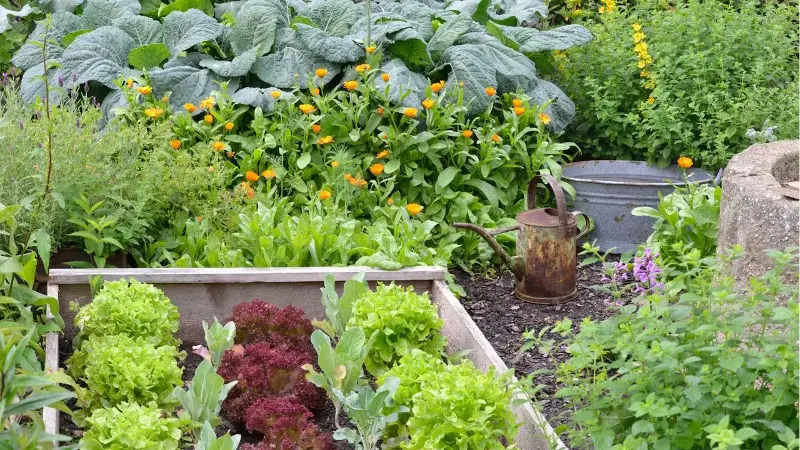
I don't have the biggest garden in the world, so I'm always looking for ways to maximize my space. That's why I've been researching how to plan a season of harvests in one square yard, i.e. planting successive crops in a 3x3ft space for a continuous supply of homegrown veg from spring to fall.
This idea uses the same principles of square foot gardening, with a bed split into a grid of nine square feet. Each square acts as a planting pocket for several crops that can be planted one after the other, providing abundant harvests through the entire growing season. It's a productive solution for a small vegetable garden, but it does require some careful planning and logistics to make it work.
To be successful with this method, you need to know what to plant when, how to space different crops, and when to harvest and make room for more vegetables. While this may sound daunting to begin with, there are actually just five easy steps to follow. Here, with the help of gardening pros, I carefully talk through each one.
How to Plan a Season of Harvests in One Square Yard
This GYO idea is all about maximizing limited space.
When choosing which crops to grow in your square yard, you need to think about your US hardiness zone, soil type, and the crops you'll actually get use out of so they don't take up space unnecessarily or go to waste.
With these things in mind, the experts recommend following the following five steps to plan a season of harvests in one square yard.
1. Prepare Your Planting Space
The first thing you have to do is make sure you have a suitable square yard to work with.
Ideally, this is somewhere with plenty of sun, and well-draining, fertile soil. You may even choose to apply a fertilizer to your vegetable garden beforehand to boost the soil quality.
This bone meal feed from Walmart is a good slow-release choice for vegetable growing.
'I recommend testing your soil,' says Staci Hill from Gooseberry Bridge Farm and co-author of The Preserver’s Garden.
'This will give you a solid plan on how to appropriately improve your garden soil for optimum growing,' she explains.
You can get lab soil tests on Amazon to give you rundown of the nutrients and pH level of your soil before planting.
While you can map out a patch of your yard for your one square yard garden, you may also find a 3x3ft raised garden bed (like this pretty green one from Amazon) is easier to work with.
2. Map Out a Grid
The most organized way to do this growing method is by dividing the yard into a grid of nine square feet, as you would in square foot gardening.
'Line the base of your bed with weed barrier cloth (like this from Amazon) and fill it with premium quality soil,' says Annette Hird, expert gardener at Easy Urban Gardens.
'You then divide this garden bed into nine equal squares. You can use whatever you like to section off the squares like thin planks of wood (from Lowe's), pegs and a string line, or even old tiles that you insert into the soil so that they form a low fence around each square,' she describes.
Each square will act as a planting pocket with its own schedule of successive crops to grow.
3. Create a Planting Schedule
This step in how to plan a season of harvests in one square yard requires the most thinking – what exactly are you going to grow?
'You can build a succession plan for all seasons based on what you love and what grows best in your climate,' Staci advises.
Succession planting, i.e. planting crops one after the other for continuous harvest, will ensure you have homegrown goods from spring to fall.
Arguably, the way to make the most of a square yard garden is by choosing fast-growing vegetables that germinate and grow quickly from seed.
Likewise, those that are space-efficient and have a compact growing habit will allow for more crops per square at a time.
Our guide to the best vegetables to grow using the square foot gardening method has plenty of ideas to consider.
You should plan your crops for each of the nine squares in three categories: early, mid, and late season harvests. Also thinking about companion planting will enhance success with each one.
An example plan for one square would be radishes for harvest in spring, followed by summer lettuce for a late spring-summer harvest, and then spinach for a late summer-fall harvest.
Essentially, each square should have a sequence of vegetables.
It really does depend on your growing zone to know when to plant vegetables, but you can note down a calendar for each of the nine squares in your grid and order your seeds – this 55-pack of vegetable seeds on Amazon has non-GMO heirloom varieties.
4. Plant Your First Crops
With you calendar figured out and your layout designed, it's time to start planting seeds.
Keep in mind some vegetables may need to be grown in a greenhouse initially and transplanted, while others can be grown directly in the ground – check out our grow guides for more information, like how to grow tomatoes and how to grow zucchini.
Don't forget to keep on top of maintaining the patch while doing this, for example by monitoring for pests that could threaten to wipe out your entire harvest.
'Many bad bugs can be combated by beneficial insects,' says Staci. You can even purchase the likes of ladybugs from Amazon to take care of aphids, for example.
Other natural pest control methods to protect your square yard veg patch include growing pest-repellent plants nearby, like with these marigold seeds from Walmart.
5. Harvest and Replant
As your first crops are ready to harvest, your next lot of plants should replace their spots.
It can be a good idea to check in on soil health in between, aerating it, laying down fresh compost if necessary, and checking for any pests and diseases.
Keep in mind the growing needs of the crops you're growing at each stage to ensure you have a successful crop, for example you may need to fertilize your tomatoes.
'To make maintenance easy, installing a watering system is also a good idea,' Annette adds.
You can get drip irrigation kits from Amazon to make it more convenient to keep your crops hydrated, especially during the summer months.
You then repeat this cycle through to fall, following your planting calendar for each square.
FAQs
What's Crop Rotation?
Crop rotation refers to not planting crops of the same family in the same spot to avoid a build-up of diseases and pests that may wipe out your harvest. This is known as 'replant disease,' and should also be avoided even when planning succession planting in successive square foot gardening.
If you only have a small growing space available, there are lots of space-saving solutions to try. For example, there are lots of ways to create a vertical garden in your yard, on a balcony, and even indoors.
Love inspiring garden ideas, outdoor advice, and the latest news? Sign up for our newsletter and get the latest features delivered straight to your inbox.
Shop Vegetable Growing Essentials
This pack of vegetable seeds has 55 non-GMO heirloom varieties to plant.
These long-sleeved gardening gloves have a gorgeous floral pattern. They protect hands and arms when tending to the garden.
This soil moisture meter identifies how wet your indoor and outdoor soil is so you never over or underwater plants again.
This beautiful wooden garden hod is ideal for harvesting homegrown crops. The mesh body allows for easy rinsing and draining.
This garden hand fork can be used to aerate your soil and improve soils structure.
This beautiful canvas garden apron has multiple pockets to carry your tools. It has a neck and waist tie for a comfortable fit.