open menu

Universe

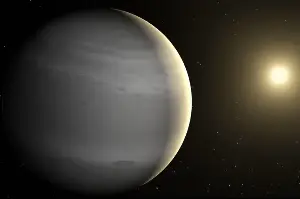
Strange ‘super-puff’ planets as big as Jupiter but lighter than cotton candy found
Earth’s oldest asteroid impact crater may just have been found
For a decade the Pink Planet was too faint for any ground telescope to study — and when James Webb finally caught its spectrum, the best fit to the light was an atmosphere hazed with salt clouds
Astronomers found a third galaxy with almost no dark matter, and all three sit on the same straight line — pointing to a collision that tore ordinary matter loose
In November, a spacecraft that has spent eight years falling toward the Sun will finally settle into orbit around Mercury, a planet we have seen up close fewer times than almost any other in the solar system.
A lunar meteorite found in northwest Africa has been shown to record evidence of an asteroid impact on the Moon 3.5 billion years ago, matching independently dated impacts on Earth and on the asteroid 4 Vesta from the same period, at the moment life on Earth was first taking hold
A dying star might never collapse into a black hole — a tiny Big Bang could ignite at its core and leave a gravastar with no singularity and no event horizon
Scientists find huge ‘magma systems’ inside Mars
An Earth-like planet, 25 light-years away from us.
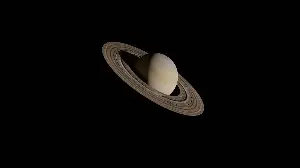
Saturn’s rings may be far younger than the planet itself — Cassini-era estimates have placed their age anywhere from about 10 million to a few hundred million years, meaning the rings we see today may not have existed for most of the age of dinosaurs.
No spacecraft has ever landed in the outer solar system — except one: the Huygens probe, which parachuted through Titan’s orange haze in 2005 and touched down more than a billion kilometres from Earth in cold that dropped below minus 170 degrees Celsius
Titan is the only world besides Earth known to have rivers, lakes, seas, clouds and rain — except its “water” is methane and ethane, flowing across a surface frozen to minus 179 degrees Celsius. And in June 2026, scientists held the first Humans to Titan Summit, beginning to map what a crewed mission to Saturn’s largest moon would actually require.
The oldest solid material ever found on Earth didn’t come from Earth at all — it was locked inside a meteorite that landed near Murchison, Victoria in 1969, and the stardust grains inside formed roughly 7 billion years ago, before the Sun existed.
Sunsets on Mars glow blue rather than red, because the fine dust suspended in its thin air scatters sunlight so that the blue gathers into a halo around the setting sun while the rest of the sky stays yellow and orange, leaving the planet that looks rusty all day to end it with a cool blue glow.
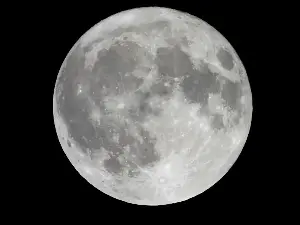
There is no permanently dark side of the Moon. The far side gets sunlight just like the near side — we simply don’t see it from Earth because the Moon is tidally locked, taking about as long to spin once as it does to orbit us once.
For billions of years, the Moon’s almost airless surface has been exposed to the solar wind, letting helium-3 become trapped in its soil — making the Moon the most tempting nearby reservoir of a fusion fuel that is almost nonexistent on Earth.
The James Webb telescope picked out 16.5 million individual stars in the Cigar Galaxy — a neighbor forming stars ten times faster than the Milky Way, in a burst estimated to last only a few hundred million years
NASA considers moon mission for Mars-type rover
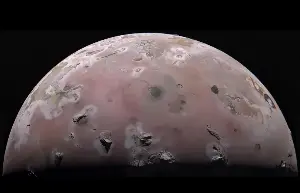
In 1979, Voyager 1 flew past Jupiter and photographed an active volcano erupting on Io, the first time volcanic activity had ever been observed on a world other than Earth, spotted by a navigation engineer checking the probe’s position
In 1972, Apollo 17 carried the only scientist to walk on the Moon into Taurus-Littrow, where a broken rover fender, 741 samples, and orange volcanic glass from 3.64 billion years ago turned the final lunar landing into a geology field trip