



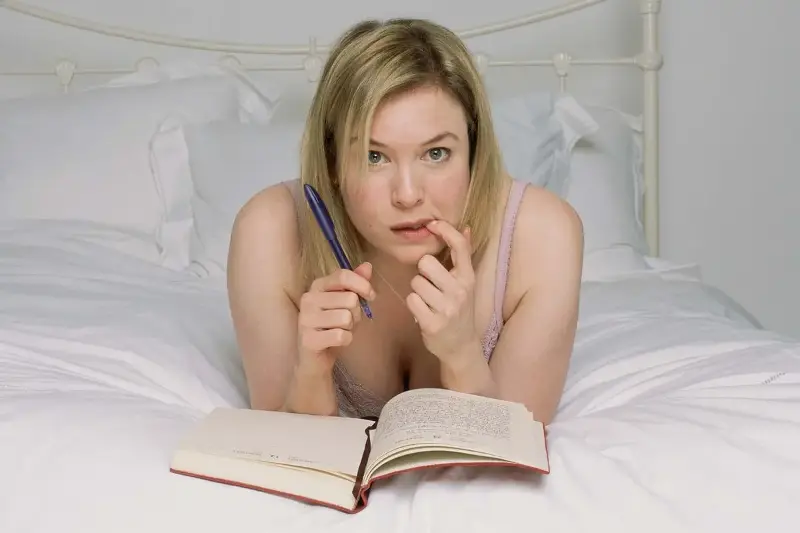
If you were ever in any doubt of the far-reaching cultural impact of Helen Fielding’s fictional diarist, Bridget Jones, I invite you to look no further than my own diary entries circa the early to late Noughties. The style – “Ran into Sam today: Doooom, hair was all mad peaks and horns! V. v. bad” – was ripped, wholesale, from my favourite unlikely romantic heroine (though my self-conscious attempts at emulating Fielding’s witty, feather-light prose fell woefully short of the original).
As a whimsical, unworldly young woman, I found my northern star in Fielding’s hilariously messy creation. She was a thrilling portal into what my future grown-up life might look like once I’d successfully moved to London, got a job in media, started devouring self-help books and drinking wine from a bottle instead of a box and, most importantly, got my heart well and truly broken by some proper, real-life boys. On second thoughts, make that men.
To me, the Bridget Jones’s Diary books were far more than the “chick lit” reads they’d been snootily branded by some. They were foundational reading, manuals on how to survive as a “singleton” navigating a world of “smug marrieds” and constant warnings to get “sprogged up” before it was too late. They made me snort with laughter and gave me hope – hope that being somewhat chaotic, deeply unserious, completely undomesticated and frequently drunk and/or hungover might not automatically exclude me from the possibility that an eligible man might one day profess to like me “just as I am”.
These were my coming-of-age novels, and the extent to which my life has mirrored that of both my literary champion and her author isn’t lost on me. I’m now employed as a features writer at the very publication where former journalist Fielding birthed her iconic protagonist while working on the news desk over 30 years ago. I also managed to move to London, find my very own “urban family” and spend the best part of my twenties and thirties unmarried and child-free while everyone around me traded singledom for wedded bliss; and you don’t get much more Bridget than that.
The very first Bridget Jones column was printed in The Independent, which turns 40 this year, back in February 1995. This was no tepid “pilot”: from day one, Bridget burst onto the scene as the full-blown, fully formed article, daubed in glorious technicolour. All of her much-loved idiosyncrasies and neuroses were already in place – including listing her weight, alcohol units and cigarette and calorie counts at the start of every diary entry. She immediately regaled readers with tales of alluringly toxic boss Daniel Cleaver and an avowal to recommit to the self-improvement New Year’s Resolutions that have become synonymous with Bridget-lore: quit smoking, lose half a stone and stop re-wearing dirty clothes from the laundry basket.
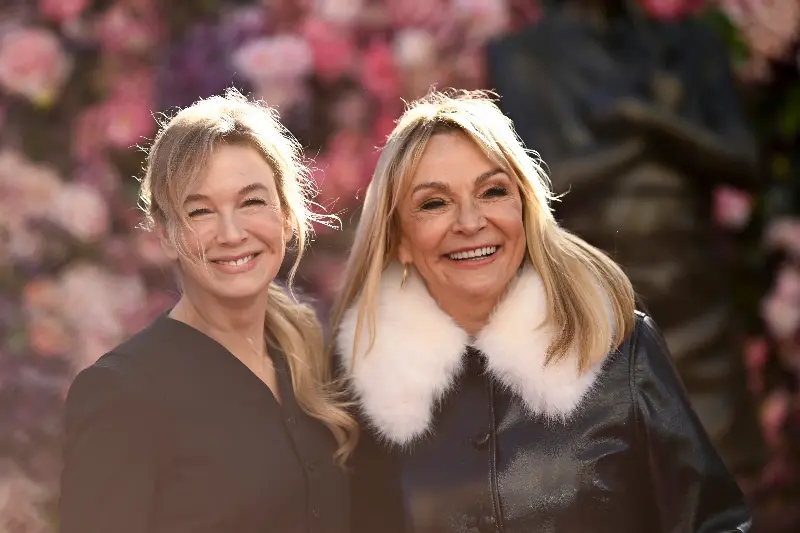
The columns were initially printed anonymously, with readers, and even Fielding’s own colleagues, completely in the dark as to who was responsible for this era-defining hot mess and her shrewdly observed depiction of middle-class Nineties London. Only the section editor knew the true identity of the author.
“I was working alongside a lot of very clever, seasoned journalists who were writing about New Labour and Chechnya, and I felt stupid writing about calories and alcohol units and why it takes three hours between waking up and leaving the house in the morning,” Fielding wrote in a 2016 Independent article of the decision to go incognito.
She had originally been asked, by editor Charlie Leadbeater, to pen a regular column about her own life as a single woman living in the capital – a prospect she baulked at, despite being “desperately short of cash” at the time.
“Much as I needed the money, the idea of writing about myself in that way seemed hopelessly embarrassing and revealing,” she writes in the foreword to a collection of the first printed Bridget Jones columns. Thus, a star was unwittingly born: “I offered to write an anonymous column instead, using an exaggerated, comic, fictional character. I assumed no one would read it, and it would be dropped after six weeks for being too silly.”
I assumed no one would read it, and it would be dropped after six weeks for being too silly
How wrong she was. Bridget Jones was a near-instant hit and the column ran as a weekly regular in the Indy for nearly three years, before being reprieved again in 2005 and 2006.
The original batch of columns went on to become the first book, Bridget Jones’s Diary, published in 1996; much of the novel is taken almost word for word from The Independent’s pages. It was a roaring success, followed up by the sequel, Bridget Jones: The Edge of Reason, in 1999, and two further books, Bridget Jones: Mad About the Boy and Bridget Jones’s Baby, published in 2013 and 2016 respectively.
These, in turn, spawned the phenomenally successful Bridget Jones film franchise starring Renée Zellweger, Colin Firth and Hugh Grant, with four films released between 2001 and 2025. Beloved Bridge has even been immortalised in statue-form, with a bronze replica unveiled in Leicester Square last year.
The character may have been fictional, but Fielding certainly drew on her own wild experiences of working in media in the 1990s. She later said of that time working at The Independent: “There was a ‘secret’ romance going on between two of the stars of the paper and someone printed out all their messages and hung them on the notice board. People were still smoking all over the place and coming back drunk from lunch. Office life was really fun.”
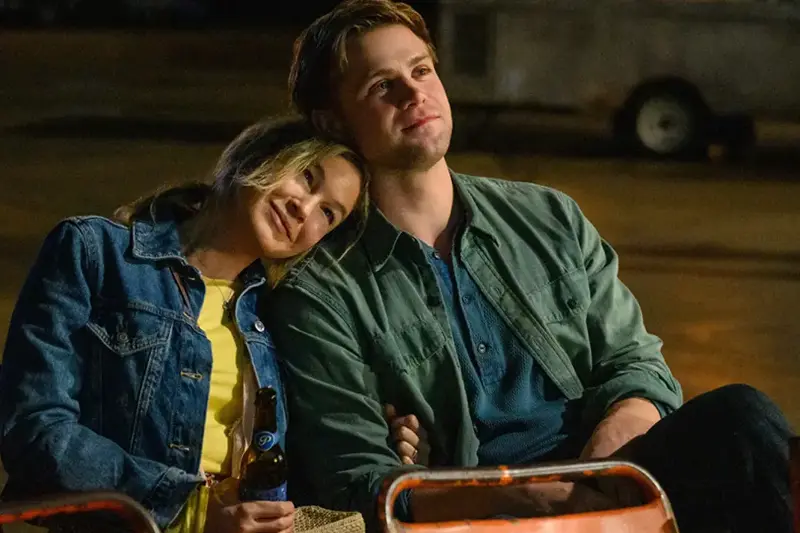
“Serious” literary critics – and even Fielding herself, to some extent – may have poo-poohed the character and concept as frivolous, but I’d wager that’s simply because this was an industry and world that had long dismissed female voices and women’s stories before bothering to listen to what they actually had to say. But the numbers are clear: the quartet of books have sold more than 40 million copies worldwide; the films have grossed nearly $900m in total. You don’t first attract, then maintain, nurture, and grow a huge international audience for 30-odd years without having hit upon something very special indeed.
There is a reason our beloved Gen-X heroine, who captured the voice of a generation of struggling single thirtysomethings, has managed to outlive her initial zeitgeist and stand the test of time. My regular return to those books and films over the years, as both she and I matured and found our feet, was down to more than simple nostalgia. Fielding fashioned a protagonist who was those rarest of things: truly authentic, alive and relatable.
Yes, Bridget may be over the top, but she’s never quite a caricature. She may make mistakes, but her heart’s always in the right place. Women connected with her because they recognised something of themselves in that flawed, flailing, hedonistic whirlwind: always striving to do better, constantly feeling like a failure, attempting to “have it all” while knowing deep down that’s impossible and living under the ticking time bomb of an ever-louder biological clock, while harbouring the secret dream that someone, somewhere, might one day see all the myriad ways in which she’s not perfect – and love her regardless.
As Fielding herself once described it: “At heart, Bridget Jones was always about the gap between how we’re expected to be and how we actually are.”
And, lest we forget, Bridget Jones in all her forms has always been fiercely, unapologetically funny: Fielding’s gifts as a razor-sharp lampoonist jump out of every line. Don’t let the obsession with dieting and references to Women Who Love Too Much fool you – those diaries are an incredibly well-crafted bit of social commentary, as well observed as Thackeray’s Vanity Fair (just with instant work messaging, Silk Cut and M&S party food thrown in for good measure).
On 28 February 1995, Bridget leapt off the page and into the world – and for that I’ll be forever grateful.
The Independent’s first ever film season at the Institute of Contemporary Arts (ICA) kicks off on 19 October with a pre-event featuring an exclusive screening of Bridget Jones’s Diary for Independent Members, including a special reception and on-stage conversation between The Independent’s Editor-in-Chief Geordie Greig and author Helen Fielding.
Membership is open to all, with the top ‘All Access’ tier available for six months available for just £1. See independent.co.uk/membership