



European cities are often praised for their lively streets, efficient public transport, and attractive public spaces. Their success is not simply about having historic buildings or narrow lanes. It comes from deliberate choices that place people’s daily needs ahead of vehicle speed and parking capacity. From Copenhagen’s cycling network to Barcelona’s traffic-calmed blocks, these cities show that urban life becomes healthier, safer, and more enjoyable when walking is treated as a primary form of transport.
A walkable city does not mean banning cars entirely; it means giving residents real choices. When homes, shops, schools, parks, and transit stops are close together, many journeys can be made on foot, by bicycle, or by public transport. This reduces congestion while bringing more life to neighborhood streets.
Short Distances Create Better Daily Life
One of the clearest lessons from Europe’s walkable metropolises is that distance matters. In compact districts of Paris, Vienna, Amsterdam, and Copenhagen, everyday services are usually within a short walk. A bakery, pharmacy, café, playground, and transit stop may all be reached in ten minutes or less.
- The 15-Minute City: Paris has actively promoted this urban planning concept, which aims to ensure residents access essential daily needs within a short walk or cycle ride.
- Mixed-Use Design: Combining apartments, offices, markets, and cultural venues keeps neighborhood streets active throughout the day rather than separating activities into distant zones.
- Practical Benefits: Shorter trips make walking realistic for families, older residents, and those without private vehicles, while local businesses benefit from steady foot traffic.
Research consistently shows that pedestrians and cyclists visit shops more frequently than drivers, providing continuous support for local neighborhoods.
Streets That Invite People to Stay
The most successful pedestrian areas are designed as welcoming community places, not merely transit routes. Copenhagen’s Strøget, one of Europe’s best-known pedestrian shopping streets, was closed to cars in 1962 and quickly became a vibrant hub filled with outdoor seating, shops, and street performers.
- Eye-Level Design: Urban planners emphasize what people experience while walking, such as comfortable pavements, active building fronts, shade, lighting, and safe crossings.
- Thoughtful Details: Wide pavements accommodate wheelchairs and strollers, frequent benches allow people to rest, and street trees cool the neighborhood during warmer months.
- Community Safety: Ground-floor windows, outdoor dining, and active storefronts create continuous street activity, making public spaces feel naturally safer and more welcoming.
Public Transport Supports Walkability
Walking-friendly cities depend heavily on reliable public transit systems. Trams, metros, buses, and suburban rail make it possible to travel farther across the city without needing a private vehicle.
- Vienna’s Network: Ranked among the world’s most livable cities, Vienna links dense housing developments directly to efficient transit routes, keeping service frequent and accessible.
- Zurich’s Priority: Trams are tightly integrated into city streets with stops located close to homes and workplaces, backed by traffic signals that prioritize public transport to keep schedules dependable.
When transit options are frequent and reliable, residents walk to nearby stops with confidence, knowing long waits are unlikely.
Cycling as Everyday Transport
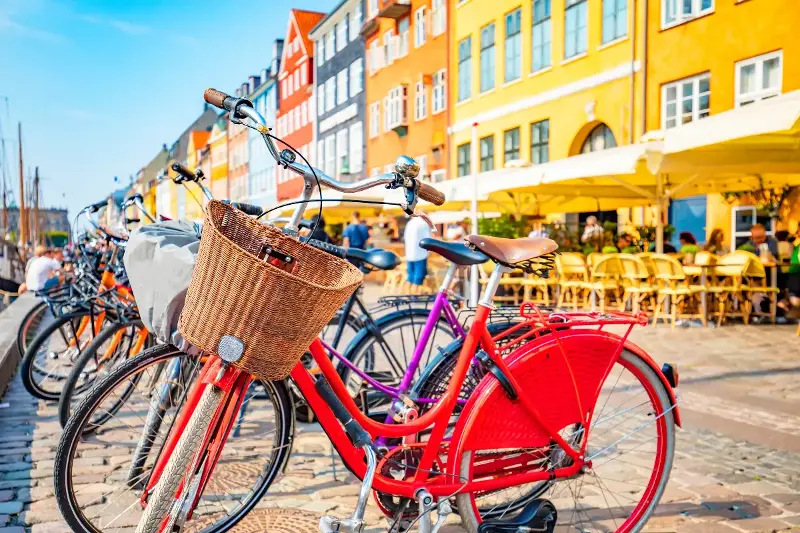
Amsterdam and Copenhagen demonstrate that cycling becomes widespread when it is safe, simple, and convenient for people of all ages and abilities.
- Dedicated Infrastructure: Copenhagen features hundreds of kilometers of separated cycle tracks, often protected from moving traffic by parked cars, along with dedicated bridges and timed traffic signals.
- Seamless Integration: Dutch children commonly cycle to school, while adults use bicycles for daily errands. Major transit hubs, such as Amsterdam’s central station, offer massive secure bike parking facilities to support multimodal travel.
- Continuous Networks: People are far more likely to cycle when routes are continuous, protected, and directly connected to key destinations rather than relying on painted road lines alone.
Reducing Traffic Without Reducing Access
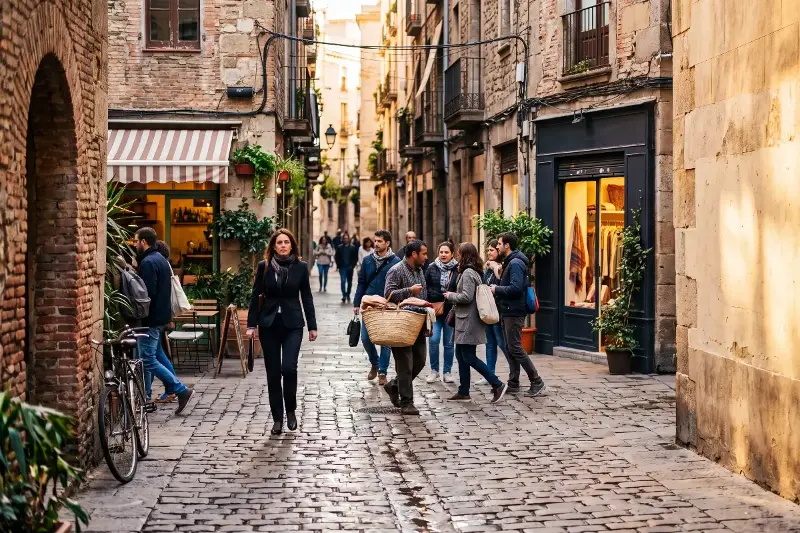
Barcelona’s superblock initiative has attracted international attention for rethinking the traditional street grid. In a superblock, through-traffic is redirected around a cluster of city blocks, while internal streets are redesigned for slow movement, walking, cycling, greenery, and community gatherings.
- Preserving Access: Essential access for residents, deliveries, and emergency services is maintained, but dangerous high-speed shortcuts are eliminated.
- Flexible Transformations: Cities often test new layouts using temporary planters, painted lanes, and movable seating before committing to permanent construction.
Designing for people is ultimately about freedom. A child should be able to walk to school safely, an older resident should be able to reach a park comfortably, and a family should not need a vehicle for every small task. Europe’s most walkable metropolises prove that streets can move people efficiently while remaining wonderful places to live.