


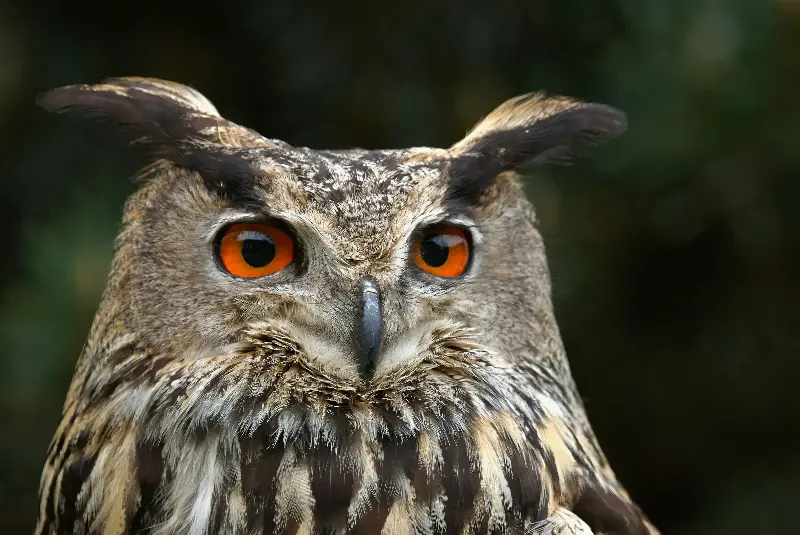
When darkness falls and most creatures retreat to the safety of their nests, a quiet, enigmatic hunter comes alive. Owls, the masters of the night sky, conduct their silent patrols from dusk until dawn, watching over fields, forests, and even city parks.
These nocturnal guardians are more than icons of mystery and folklore—they are astonishing examples of biological engineering. Their senses, especially their vision, put even the most high-tech security cameras to shame.
THE REMARKABLE EYES OF NIGHT HUNTERS
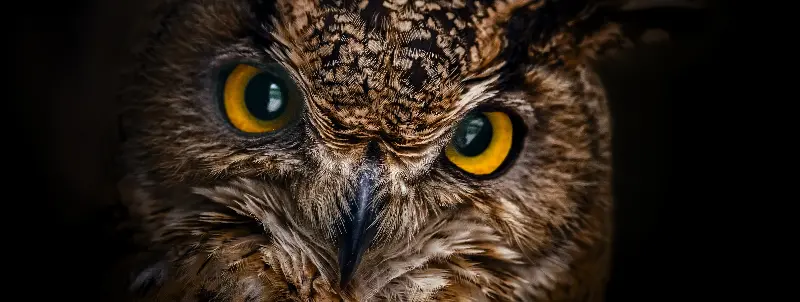
Owls command a vision system that is nothing short of miraculous. While humans install infrared cameras for nighttime protection, nature perfected night vision millions of years ago. An owl’s eyes are so specialized they can spot the movement of a beetle in near-total darkness.
Key structural advantages include:
- Tubular Shape: Unlike our spherical eyes, an owl’s eyes are tubes held in place by bony structures called sclerotic rings. This allows for a massive lens and retina.
- Rod Cell Density: Their retinas are packed with light-sensitive rod cells, far outnumbering those of daytime hunters like hawks.
- Colossal Pupils: Their pupils can dilate to incredible widths to pull in every stray photon of light.
- The Tapetum Lucidum: This is a reflective layer behind the retina. It acts like a natural mirror, bouncing light back through the eye to give the owl a "second chance" to see an image.
If humans had eyes proportionally as large as a Western Screech Owl, our eyes would be the size of oranges!
SILENT WINGS AND STEALTHY PATROLS
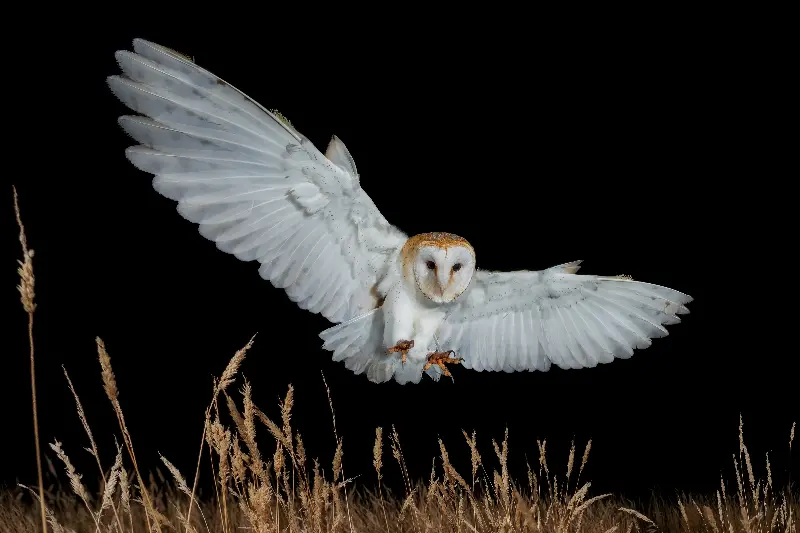
It isn’t just sight that gives owls the edge. Unlike the whirring motors of mechanical devices, owls operate with absolute silence. This “ghost flight” is achieved through three specialized feather features:
- Serrated Leading Edges: The front of their wing feathers acts like a comb, breaking up air turbulence into smaller "micro-turbulences."
- Trailing Fringes: Soft fringes on the back of the feathers further dampen sound waves.
- Velvety Down: A soft, downy covering on the wing surfaces muffles any remaining mechanical noise of feathers rubbing together.
This stealth allows an owl to swoop down inches from unsuspecting prey without a whisper. When an owl flies, the world—acoustically speaking—stands still.
MORE THAN JUST EYES: THE AUDITORY TOOLKIT
While vision is their superpower, an owl’s face hides another remarkable feature: the facial disc. This circular arrangement of feathers acts like a parabolic satellite dish, capturing and funneling sound toward their ears.
Interestingly, many owls have asymmetrically placed ears—one is higher on the skull than the other. This offset allows them to:
- Triangulate Position: They can perceive the tiny time difference it takes for a sound to reach each ear.
- Hunt in Total Darkness: Some species, like the Barn Owl, can strike invisible prey hidden beneath snow or thick grass using sound alone.
Once the target is located, their razor-sharp talons and crushing grip make escape nearly impossible.
NATURE’S UNOFFICIAL NIGHT GUARD
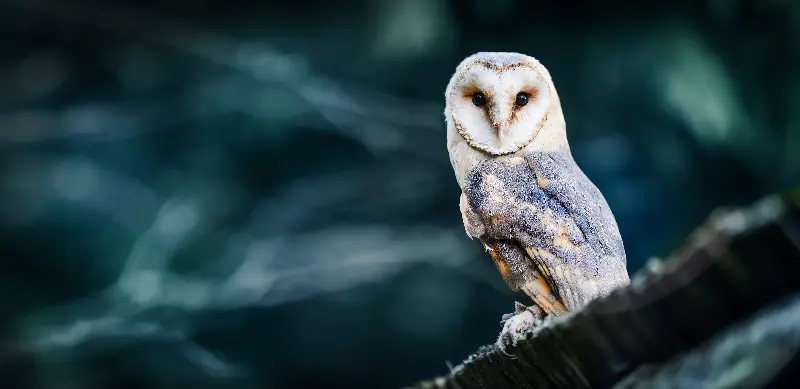
Owls aren’t patrolling to protect humans, but we benefit immensely from their presence. By controlling rodent populations—mice, rats, and voles—they keep agricultural crops and stored grain safe.
- Pest Control: A single Barn Owl family can consume up to 3,000 rodents in one breeding season.
- Ecosystem Indicators: Because owls sit high in the food web, their health reflects the health of the entire environment.
In many neighborhoods, encouraging owls to take up residence is a far more effective (and eco-friendly) solution than using toxic pesticides.
AN ENDURING ALLURE
From the companion of the Greek goddess Athena to the spooky omens of various cultures, owls have always stirred the human imagination. Yet the more we learn, the more they deserve our scientific admiration.
Their stealth is something aeronautical engineers aspire to replicate, and their vision outpaces our best sensors. The real magic lies in the perfect harmony of their biology: they are the silent keepers of the night, always on duty, sharp-eyed, and forever a little mysterious. Next time you hear a haunting hoot under the moon, remember: nature’s original night watch is on the job.