



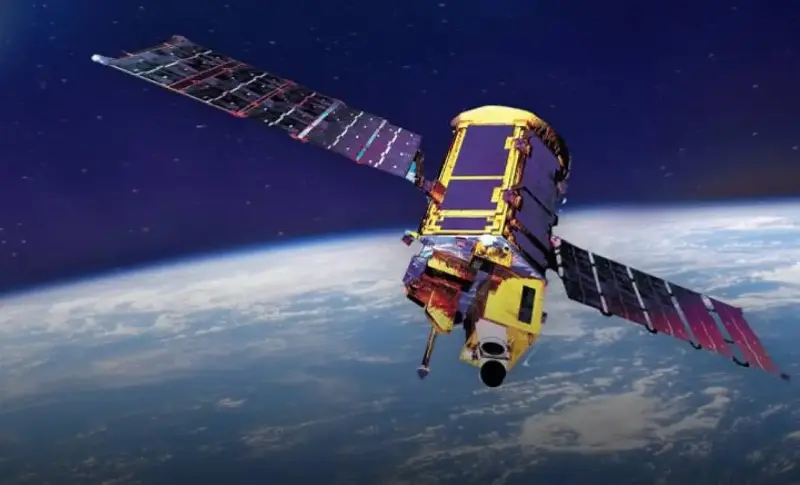
SOUTH Korean aerospace company Korea Aerospace Industries (KAI) is seeking to expand cooperation with the Philippines beyond the FA-50 light combat aircraft and KF-21 fighter jet programs, this time by pursuing next-generation satellite projects.
This cooperation could include the establishment of a satellite component supply chain and joint development projects.
The company outlined its plans during the 77th International Astronautical Congress (IAC 2026), held earlier this week in Antalya, Turkey.
KAI said it would approach countries with which it has already established contacts, including the Philippines, Thailand and Turkey, to discuss cooperation on future satellite projects. It also planned to explore partnerships with global space companies to develop satellite components and pursue joint development.
The proposed cooperation comes as the Philippines advances its own space technology programs, with the Philippine Space Agency (PhilSA) targeting 2027 for two separate initiatives: the launch of the Multispectral Unit for Land Assessment (MULA) satellite and the test launch of the country's first liquid-fueled sounding rocket.
PhilSA has said MULA could be launched as early as April 2027. The satellite is intended to provide Earth observation data for applications such as agriculture, environmental monitoring and disaster management.
Separately, the country is targeting 2027 for the test launch of its first liquid-fueled sounding rocket in Cagayan.
The rocket is a test vehicle for space-related research and technology development, not an operational satellite launcher.
At the Congress, KAI showcased a low-Earth-orbit communications satellite based on international standards for sixth-generation (6G) mobile communications, the CAS500-2 next-generation medium-sized satellite, and the KSIS-K ultra-small synthetic aperture radar (SAR) satellite.
SAR technology uses radar signals to capture images of the Earth's surface and can operate at night and through cloud cover. It has applications in environmental monitoring, disaster response and maritime surveillance.
KAI also presented a ground-based satellite data transmission service developed in cooperation with Meissa, a company specializing in satellite imagery data.
A KAI official said the company intended to promote its satellite platform technology and business capabilities, expand international partnerships, and generate export opportunities.