



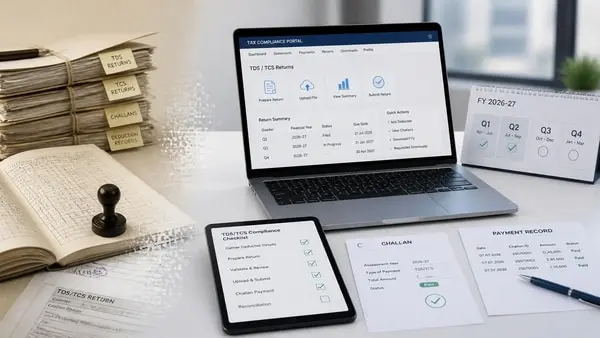
Tax deducted at source (TDS) and tax collected at source (TCS) statements can now be filed directly online through the TRACES portal from Tax Year 2026-27, which started on 1 April 2026.
A deductor is a person or entity that deducts TDS from a payment before making it to the recipient.
The facility eliminates the earlier process of filing the statement through the Income Tax portal and waiting for it to be transferred to TRACES for further processing. Here's what you need to know.
What has changed with online TDS statement filing facility on TRACES?
Siddharth Maurya, Founder and Managing Director, Vibhvangal Anukulara, said the change is part of the alignment of the TRACES ecosystem with the Income-tax Act, 2025 and the new Income-tax Rules, 2026.
According to him, deductors now have a separate compliance environment on TRACES, where they can electronically file their TDS and TCS statements. The earlier framework used Forms 24Q, 26Q, 27Q and 27EQ. These have now been replaced by Forms 138, 140, 144 and 143, respectively.
“The TRACES portal already directs users to a separate compliance environment for Tax Year 2026-27 onwards,” he added.
Which TDS and TCS forms can be filed directly through TRACES?
Maurya said the four major quarterly TDS/TCS statements from Tax Year 2026-27 are:
- Form 138: Replaces Form 24Q and applies to employers and others deducting tax at source on salaries, pensions, and specified interest payments.
- Form 140: Replaces Form 26Q and covers TDS on payments other than salaries to residents, such as professional fees, commission, and rent.
- Form 144: Replaces Form 27Q and covers TDS on specified payments made to non-residents.
- Form 143: Replaces Form 27EQ and covers quarterly TCS statements filed by persons responsible for collecting tax at source.
The quarterly filing deadlines remain unchanged. Statements are due by 31 July, 31 October, 31 January and 31 May for the first, second, third and fourth quarters, respectively. This means the TDS/TCS statements for July–September 2026, or the second quarter of Tax Year 2026-27, are due by 31 October 2026, he added.
How can deductors file TDS statements directly on TRACES?
Maurya said eligible deductors must log in to the TRACES portal and enter the compliance environment applicable to Tax Year 2026-27 onwards. They then need to select the relevant statement and quarter and prepare the statement with accurate deductor and deductee details.
The process also requires deductors to reconcile the TDS deducted and deposited with the relevant challans and complete the prescribed electronic filing and verification requirements. The department has also updated the utilities and formats for the new forms, he added.
- Choose the relevant TDS form.
- Add challan details by importing them or entering them manually.
- Fill in the details of the deductees. Use bulk upload for multiple entries.
- Link each challan with the relevant deductee entries.
- Confirm the details and complete e-verification using Aadhaar OTP or other available methods.
Maurya said this framework particularly benefits employers, payroll teams, tax practitioners, and other deductors by streamlining regular TDS compliance. For taxpayers from whose income TDS is deducted, timely and accurate reporting is equally important, as it ensures that the TDS credit is correctly reflected in their records and remains aligned with the income reported.
Disclaimer: This is only for informational and educational purposes. Please consult a qualified expert for the latest laws and regulations.