



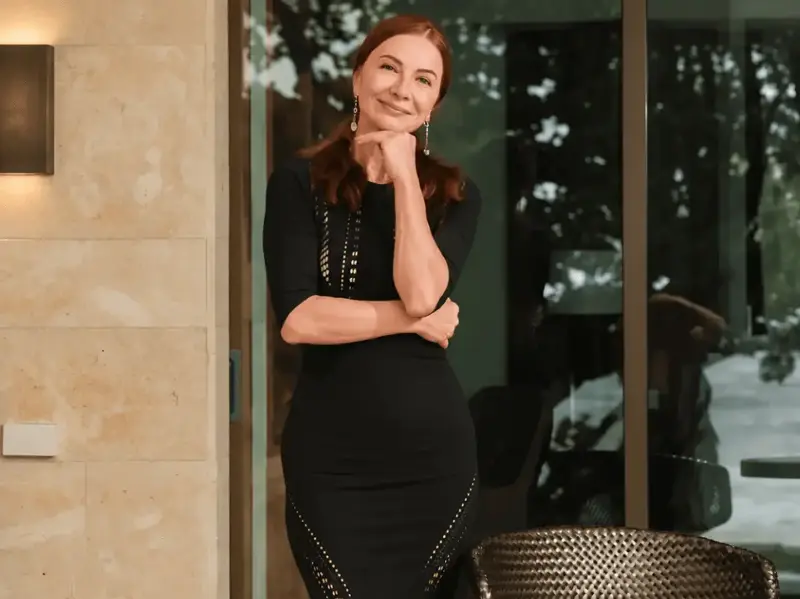
For years, I was someone’s wife, someone’s mother, the woman taking care of a family and making decisions around other people’s lives. I had my own name, of course. Barbara. Yet somewhere along the way, I became much easier to identify by my relationship to everyone else. I lost my complete identity.
I see this pattern everywhere. Men introduce their wives by saying, “my wife,” and I always want to ask, “What is her name?” She has one. She had a life before she became somebody’s wife, and she still has one now.
The same thing happens to mothers, daughters, and women who spend decades making themselves indispensable to everyone around them. We become so good at carrying other people that we forget what it feels like to carry ourselves.
I know because I did it. I gave up my career. I gave up parts of my independence. I gave up pieces of myself because I believed marriage was forever and because I believed love sometimes required sacrifice. I thought adjusting my life around another person was part of making a relationship work.
Looking back, I understand something I wish more women understood earlier: you should never surrender the things that make you feel alive just to be loved.
My divorce forced me to face that reality without the comfort of pretending it would somehow fix itself. I could have immediately searched for another man to provide protection, financial security, or the feeling of being wanted. Instead, I had to ask a much more uncomfortable question: What can I build for myself?
Finding Myself Again After Divorce
It was a question that became especially meaningful when my close friend went through her own divorce in her mid-40s. I watched her suddenly discover parts of herself that had been buried under years of family responsibilities. She could make decisions for herself. She could imagine different possibilities. She could ask what she wanted from the next chapter of her life.
Her experience reminded me how easily women can lose their identity inside the roles they perform. Children grow up, marriages change, careers end or take unexpected turns, and our bodies change. Suddenly the identities we built for decades can disappear, leaving one enormous question behind: Who am I now?
I confronted that question at 54.
I went back to school.
Starting again at that age could have looked like starting from zero. I didn’t see it that way. I looked at what I had already learned, what I already knew, the experiences I had accumulated, and the person I had become. Then I asked myself what I could do with all of it.
We spend too much time looking at what we have lost. I only have this. I should have done that. I had an opportunity when I was 30. I chose the wrong path. We treat our past like evidence against ourselves, even though every decision we made was made with the knowledge we had at that moment. There is never any guarantee that it would have worked out.
You Don’t Have to Hit Rock Bottom to Change
I don’t believe women need to hit rock bottom before they are allowed to rebuild. I hear people talk about reaching their lowest point and then finding the strength to climb back up. I understand that story, but I don’t think suffering should be a prerequisite for change. Sometimes you simply have to look at your life and decide that something needs to move.
My body gave me another reminder of that. I dealt with lung problems and menopause, and I experienced the assumptions that can come with getting older. There were moments when age felt like a label other people were ready to put on me before they knew anything about me.
I refused to let that become my definition.
Aging is happening to all of us every second. None of us knows what the next second will bring. I don’t want to spend the years I have left preparing myself to become smaller. I want to understand my body, protect my energy, and use the knowledge I have earned.
I wasn’t brave. I’d had enough.
That is probably the simplest explanation for the changes I made. I reached a point where remaining exactly as I was became harder to accept than taking a new direction. Sometimes people call that courage. I call it being finished with a life that no longer fits.
Building a Life That Belongs to You
Women often imagine that reclaiming themselves means doing everything alone. I don’t believe that. Independence means knowing you can support yourself, including financially and emotionally. It does not mean refusing help. We need other women. We need mentors, friends, and people who can look at us and say, “I’ve been through this too. Here’s what helped me.”
That is what I create and teach now: a space where women stop competing over whose life looks better and start learning how to change their own. We identify the patterns that keep us stuck, decide what needs to change, and then act on it with discipline. Not when it feels convenient. Not when motivation happens to show up. Change requires commitment to the goal and the willingness to keep showing up until new habits become part of who you are.
I teach women the “how”: how to take what they know and actually live it. Because trying is not enough. Doing is. And when that change happens internally, it shows. You walk into a room differently. People feel your presence before they notice what you are wearing. The confidence, energy, that sense of ownership. That is the transformation.
Comparison steals enormous amounts of energy. A woman sees another woman with the career she wants, the relationship she wants, the body she wants, or the lifestyle she wants, and immediately wonders why she doesn’t have it. I would rather ask a different question: What did she do to get there?
Curiosity can take you somewhere jealousy never will.
Every woman has a story behind the life she is living. The woman you envy has had failures, disappointments, and moments when she wondered whether she could continue. You are seeing the finished photograph, not the years it took to get there.
I Choose 67
I have learned to look at my own past the same way. I can remain angry about the things I gave up, or I can take the lessons and use them. I can spend my time imagining who I might have been at 30, or I can use everything I know at 67.
I choose 67.
I don’t want to be 20 again. Why would I? I want the knowledge I have now. I want to bring it into the room with me. I want people to wonder who I am because of the energy I carry, the way I present myself, and what I know. A woman does not become invisible because she gets older. She becomes invisible when she starts believing she should disappear.
We can be attractive, compelling, and sensual at any age. Presence has nothing to do with dressing like a 20-year-old. It comes from knowing yourself and being comfortable enough in your own life to let people notice you.
Don’t give up what you love to be loved. Don’t make another person the foundation of your identity. Don’t wait for rock bottom before you change direction. Don’t spend your life studying another woman’s life while neglecting your own.
Look at what you have now, and use it.
Ask for help when you need it. Learn from women who have already walked through something you are facing. Build your own financial and emotional foundation. Let your past teach you without allowing it to keep you there.
Most importantly, remember your name.
You may have spent years being somebody’s wife, daughter, or mother. Those roles can be meaningful. They can also change, but you remain.
I have rebuilt myself more than once, and I never felt fearless doing it.
Sometimes the first step is the day you decide you’ve had enough of living a life that isn’t yours. The first step is always the scariest, but it’s yours.
Barbara Scheidegger is the founder of Let It Go Hypnosis and Keeping Up With Barbara, through which she offers paid coaching and hypnotherapy focused on personal reinvention and attitudes toward aging.
The views expressed in this article are the writer’s own.