



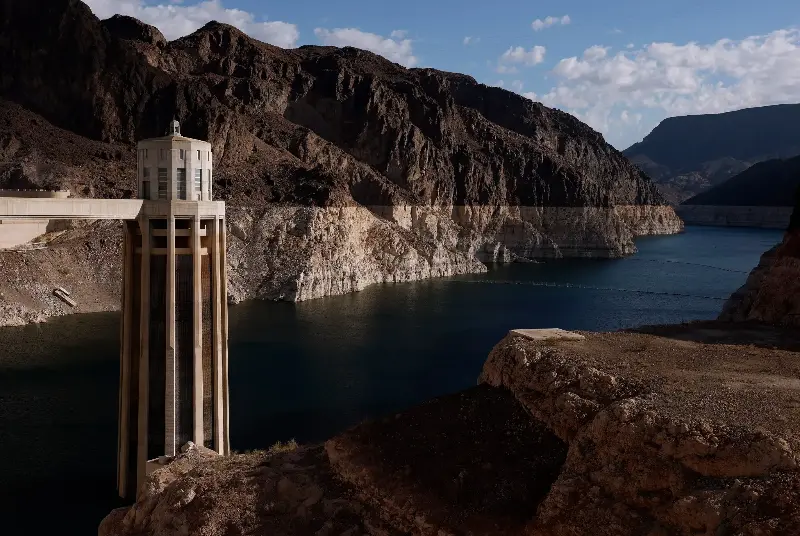
A strengthening and potentially historic El Niño is expected to bring wetter conditions to parts of the United States this winter, raising hopes for some relief across the drought-stricken Colorado River Basin. While increased rain and mountain snowfall could benefit parts of the river system, experts say any gains for major reservoirs such as Lakes Mead and Powell are far from guaranteed.
Water levels at Lakes Mead and Powell, the two largest reservoirs in the country, fell to record lows in August after what federal water managers described as record-low snowpack across the Colorado River Basin during the 2025-26 winter. The Colorado River, which stretches roughly 1,400 miles serving seven Western states and Mexico, supplies water to tens of millions of people while supporting agriculture, hydropower generation, recreation, fish and wildlife.
What Is El Niño?
El Niño is a naturally recurring climate pattern associated with warmer waters in the Pacific that can influence temperatures and rainfall worldwide.
For the U.S., typical El Niño effects can include stormier weather across southern regions, drier conditions in some northern areas and changes in hurricane activity.
Federal forecasters said last week there remained a high chance for an event exceeding the strength of previous El Niño events dating back to 1950.
“With an event of this magnitude, the chances of experiencing impacts consistent with El Niño are larger, though not guaranteed,” the National Weather Service’s Climate Prediction Center said.
Could El Niño Boost Colorado River Reservoirs?
“The very strong El Niño that is expected during the Northern Hemisphere Winter 26-27 is likely to bring above-average precipitation to the Colorado River Basin and a correspondingly heavy mountain snowpack at higher elevations,” Greg Postel, a storm and hurricane expert with The Weather Channel, told Newsweek.
Postel added that with the expected active storm track across the Basin, temperatures would likely be slightly below the winter average, with southern sections of the region more likely to see these effects.
Increased rain and mountain snow could provide temporary local drought relief, Postel said. “But the accumulated effect of drought in recent years on the local soil composition probably won’t allow substantial runoff to reach reservoirs such as Lake Mead.”
He added: “The drier-than-average ground will preferentially absorb the precipitation and snowmelt rather than facilitate runoff into the tributaries.”
Postel said while some reservoirs would “almost certainly benefit over the long haul,” these boosts wouldn’t be distributed equally across the river system. “And given this winter’s El Niño-driven storm track is unlikely to last into next winter, a gradual return to pre-El Niño levels seems plausible.”
Lakes Mead and Powell were 26 percent full and 21 percent full, respectively, as of Thursday.
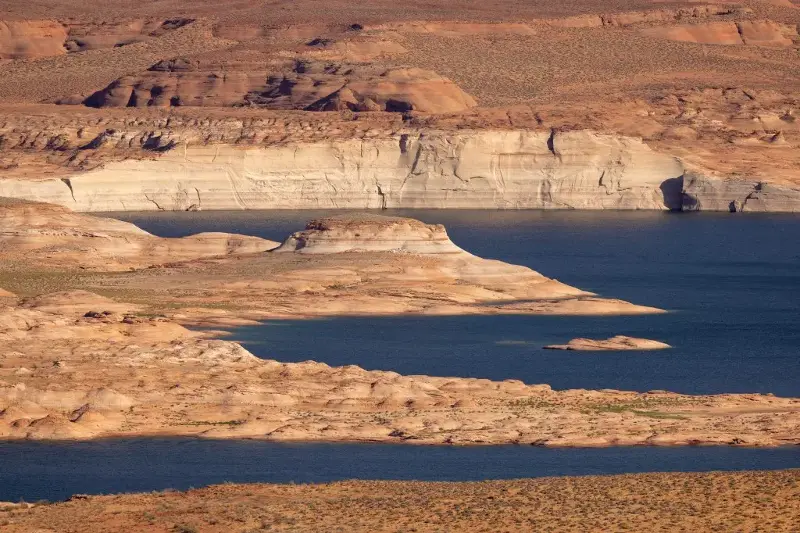
Why El Niño Snow Isn’t a Guaranteed Boost for All Colorado River Reservoirs
Paul Miller, a service coordination hydrologist at NOAA‘s Colorado Basin River Forecast Center, told Newsweek in August that there is “no correlation” between El Niño and winter snowpack in the Colorado River Basin, where the vast majority of the river’s water originates.
“We have had large snowpack events in both El Niño, La Niña and neutral years. We’ve also had well-below-average snowpack events under all three of those conditions as well,” Miller said.
Even when snowpack is above average, that does not necessarily translate into major gains at Lake Mead. Miller noted that reservoir levels also depend on factors beyond winter snowfall, including water-management decisions. He added that some of the water generated during a strong snow year may be retained upstream in Lake Powell rather than flowing directly into Lake Mead.
Newsweek’s reporters and editors used Martyn, our AI assistant, to produce this story. Learn more about Martyn here. Contact Newsweek editors on this story: Mattew Cannon and Anthony Murray.