



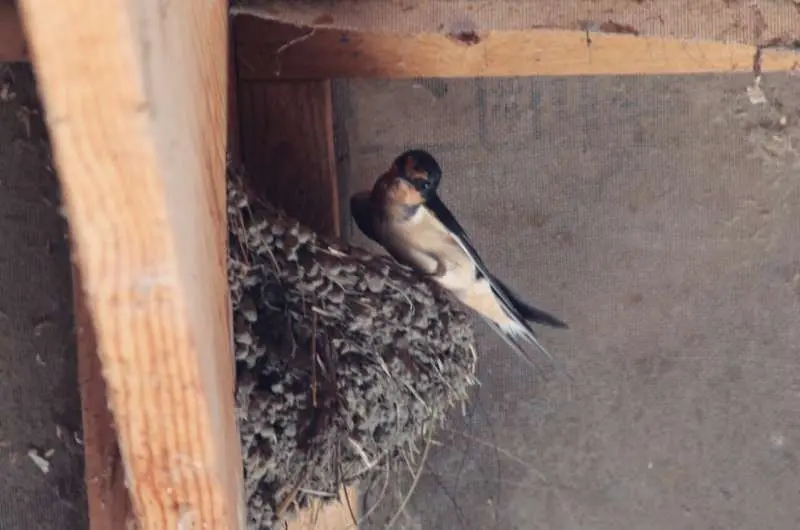
Climate change threatens to cause increasingly extreme and variable temperature swings, affecting everything from urban infrastructure to global food supplies. In the animal kingdom, the hardest hit may be the youngest and smallest songbirds, according to new research.
Scientists at the Department of Evolution and Ecology, University of California, Davis, wanted to investigate how temperature affects the growth of baby birds and how factors such as their age, size, and parental care make them more or less vulnerable to the weather.
Monitoring nests
To find out, the team monitored 31 nests and 113 wild barn swallow nestlings in Boulder County, Colorado, as they detail in a paper published in the journal PLOS One. They chose this species because its chicks are born featherless and cannot regulate their body temperature early on, making them especially sensitive to the environment.
Digital thermometers were placed next to each nest to record the air temperature immediately around it every 15 minutes. Additionally, the scientists weighed the chicks and measured their wings at three different stages of development (3 to 4 days old, 8 to 9 days old, and 11 to 13 days old) and observed how often the parents brought them food.
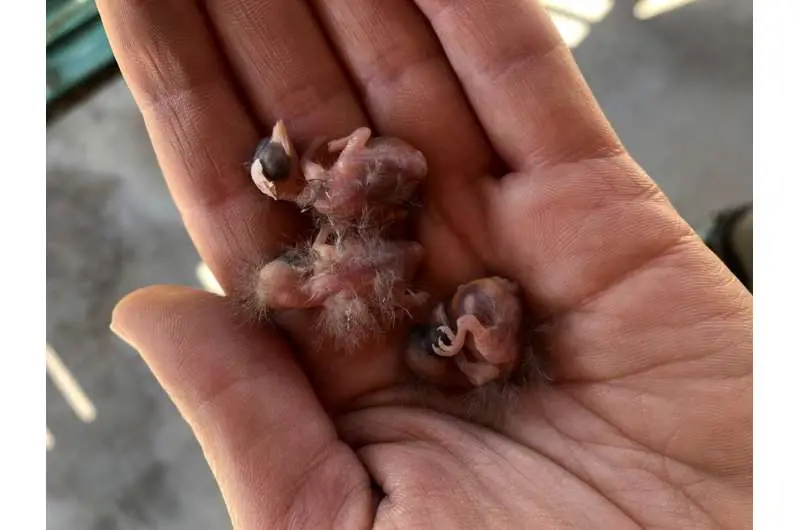
The study found that the impact of the cold depends largely on when the chicks are exposed to it. Chillier conditions early in development, before they can keep their own bodies warm, resulted in a lower body mass. However, this negative effect was not detectable in older nestlings as they could thermoregulate, which is the ability to maintain a constant body temperature regardless of the external environment.
"Lower minimum temperatures were associated with lower nestling mass in early but not late development (before but not after the putative development of thermoregulatory independence)," wrote the study authors.
Parental feeding provided some protection from the elements. Nestlings fed regularly by both parents were less affected by cold temperatures.
Hot and variable temperatures were associated with lower body mass and were also linked to smaller wing size, which could impact their ability to fly.
In each brood, the smallest chick was more vulnerable to temperature swings and often struggled to maintain mass, although this evidence was marginal.
Challenging circumstances
The researchers suggest that these combined factors create a complex survival landscape for young birds. "These findings indicate the existence of fine-scale heterogeneity in which the effects of temperature on nestling development are sensitive to metabolic constraints and early-life social environment."
While these insights are valuable, the team noted that the study tracked only one bird group over a single season. More work will be needed to determine whether these patterns hold true across other species over several years.
Written for you by our author Paul Arnold, edited by Gaby Clark, and fact-checked and reviewed by Robert Egan—this article is the result of careful human work. We rely on readers like you to keep independent science journalism alive. If this reporting matters to you, please consider a donation (especially monthly). You'll get an ad-free account as a thank-you.
Publication details
Sage A. Madden et al, The effects of temperature on nestling growth in a songbird depend on developmental constraints, PLOS One (2026). DOI: 10.1371/journal.pone.0334815
© 2026 Science X Network
Citation: How temperature swings impact the growth of young songbirds (2026, April 30) retrieved 30 April 2026 from https://phys.org/news/2026-04-temperature-impact-growth-young-songbirds.html
This document is subject to copyright. Apart from any fair dealing for the purpose of private study or research, no part may be reproduced without the written permission. The content is provided for information purposes only.