



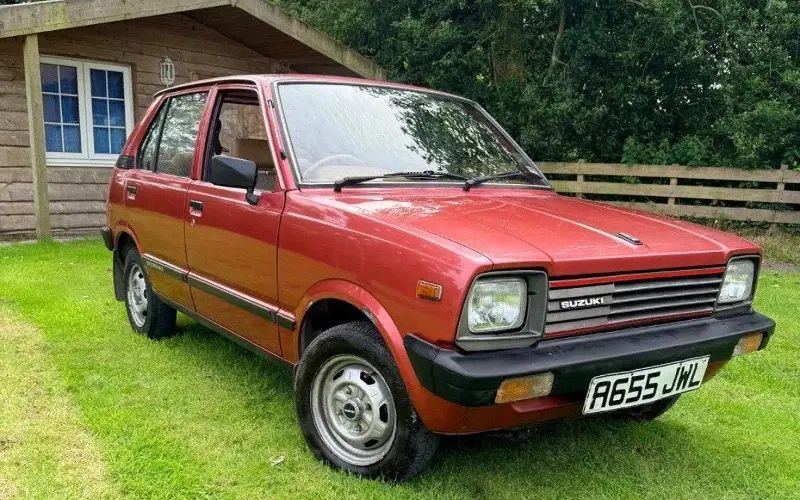
If you encounter a Suzuki Alto FX at a classic car show, the first impression is that it is not so much diminutive as Lilliputian. At 10ft 9.7in (3.29m), it is less than 10in longer than an original Mini and nearly 3ft shorter than a modern-day Ford Puma. This 1983 example owned by Phil Howells is one of only 10 believed to remain on the road.
The Alto’s dimensions reflected Japan’s Kei car regulations, which date from July 1949. The government introduced the Kei Jidōsha (“light automobile”) regulations to stimulate post-war car ownership. The idea was that this special class would promote affordable small cars, with owners benefiting from tax, licence and insurance concessions.
Six years later, the Ministry of International Trade and Industry stipulated that a Kei car should have an engine no larger than 360cc and be capable of 62.5mph. That year, Suzuki introduced the Suzulight saloon, its first four-wheeled vehicle and the first front-wheel-drive Japanese car.
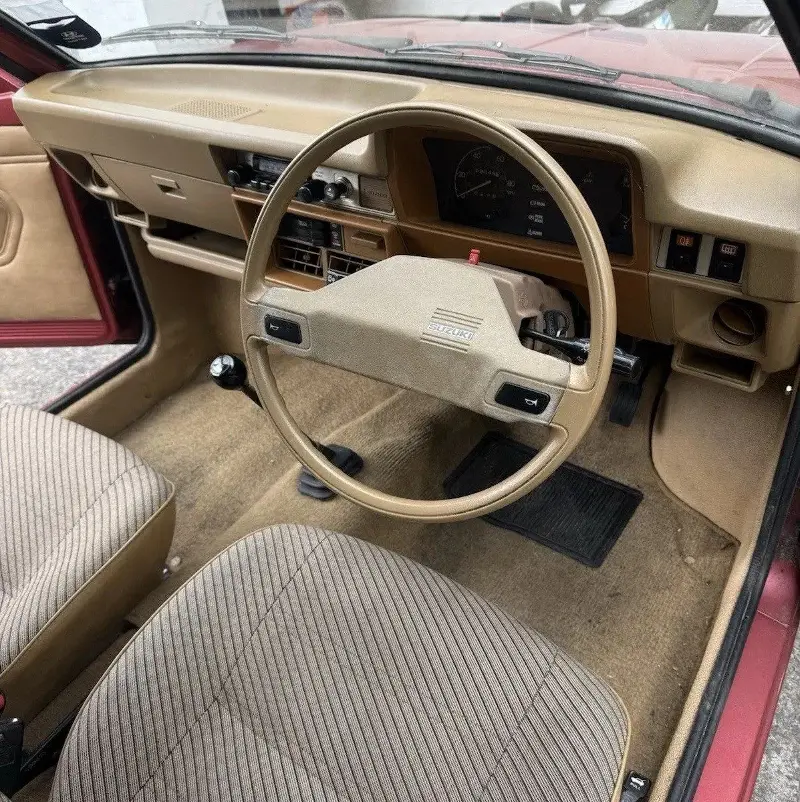
By 1976, Kei cars could have engines up to 550cc. In May 1979, Suzuki unveiled the SS40-series Fronte hatchback, sold overseas as the Alto. Power was from a choice of three-cylinder engines, a 539cc two-stroke or a 543cc four-stroke. One important market was those younger motorists who opted for a Kei car in the wake of the 1979 fuel crisis triggered by the Iranian Revolution. In addition, jolly colours such as “Apple Red” were intended to appeal to female consumers.
Meanwhile, some British motorists wondered if the Alto would be marketed in this country. Suzuki had been importing motorcycles since 1963; 14 years later, the concessionaire announced that it would soon distribute four-wheeled vehicles and 1979 marked the establishment of Suzuki Cars (GB) Ltd, to sell the LJ80 4WD utility and the mid-engine SC100 Whizzkid coupé via a network of 22 dealerships.
On July 1 1981, Suzuki GB began selling the Alto. It imported only the FX version powered by a 40bhp, 796cc three-cylinder engine, which propelled the tiny car to an 84mph top speed. A two-speed automatic was an optional extra in place of the standard four-speed manual gearbox.
One sales challenge was that Suzuki, in terms of cars at least, was a latecomer to the British market, following in the wake of Nissan, Toyota, Honda, Mazda, Mitsubishi, Subaru and Daihatsu. A further issue was that, since 1975, Japanese imports had been restricted to 11 per cent of the UK car market, so Alto sales would inevitably be limited. Suzuki GB initially planned to import only 200 per month.
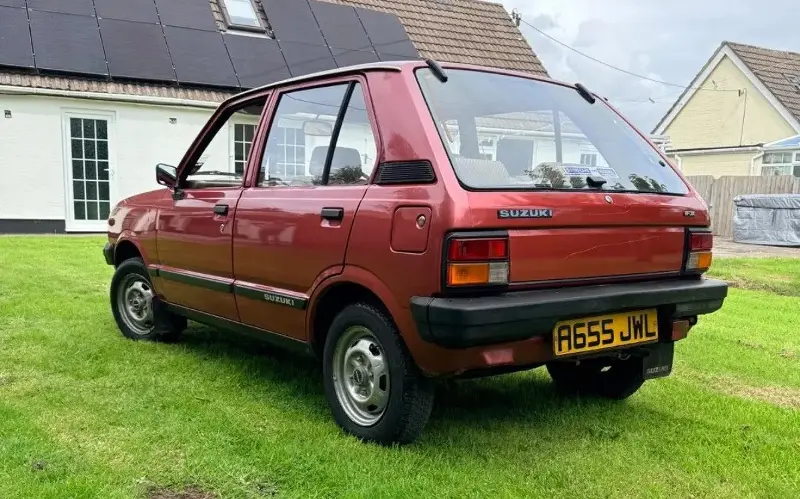
Yet the Alto was well-suited to those who needed a small urban transport, who regarded the Mini as somewhat dated and who were not averse to buying a Japanese car. At £2,675, the Alto cost over £100 less than a Mini 1000 City. It was also cheaper than the Daihatsu Charade at £3,099, the Fiat Panda 45 at £2,860, the Citroën Visa Special at £2,821, the base-model Austin Metro at £3,333 and the Ford Fiesta Popular at £3,145.
Despite this low price, the Alto featured an AM/FM radio, front head restraints, a cigarette lighter, two-speed wipers with electric washers and a split rear seat. Owners of the Fiesta Popular, with its foot pump for the windscreen washers, could only gaze in wonder at such luxuries. Suzuki further tempted buyers with “an urban fuel consumption of 42.2mpg”, “four-door luxury for a two-door price” and the lift-up rear screen – you would be hard-pressed to call it a hatchback.
The CA71-Series Alto succeeded the SS40 in 1984 and the model is now in its ninth generation. If the surviving numbers of the FX are limited, this example is a reminder of how the original Alto helped establish the Suzuki name with car buyers as a producer of diminutive but rugged machines. Forty-five years ago, The Telegraph noted that Suzuki was one of Japan’s fastest-growing companies, while the Alto so impressed Autocar that they observed: “If the trade agreement is lifted in this country, Suzuki would surely make a killing.”