



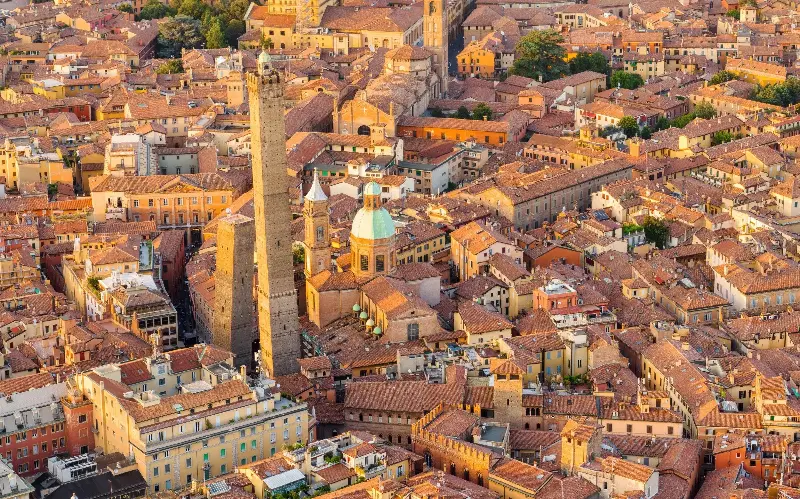
A marvellous medieval centre, piles of perfect pasta and a thriving university, which is Europe’s oldest, dating from 1088. Bologna ticks all the boxes for a memorable stay combining good food with cultural curiosities.
There are treasures to be discovered including a peppering of medieval towers, miles of porticoes and monumental statues with intriguing stories attached. But the city’s role as gastronomic capital has really brought it to the fore in recent years. Food is taken seriously here: more than 30 official recipes – including much-loved Italian dishes such as tortellini, lasagne and tagliatelle – are even registered at the Chamber of Commerce and it’s the local foodie culture that makes the strongest impact, with colourful markets, historic bars and atmospheric restaurants serving traditional cuisine.
The city is ideally placed and well connected for out-of-town forays too, and after a day away you’ll be glad to return to the authenticity, friendliness and genuine flavours of Bologna.
In this guide:
How to spend your weekend
Day one: morning
Start your day exploring the sights of Piazza Maggiore, Bologna’s beating heart. Pop into the tourist office under the arches of Palazzo del Podestà to invest in a Bologna Welcome card for free entrance to many of the city’s attractions. Try out the whispering corners under the palazzo’s vault; there’s a particularly striking view from here of the monumental Neptune fountain, a 16th-century symbol of papal power by Flemish sculptor Giambologna.
Enter the Sala Borsa library just beyond the fountain to see the small archaeological area downstairs then head next door to the city hall, Palazzo d’Accursio, and climb the nearly 200ft-high clock tower for stunning views. Next stop around the piazza is the vast San Petronio basilica. If your visit coincides with midday be sure to see the phenomenal effect of a spot of sunlight crossing the floor meridian which, at 220ft long, is the world’s biggest.
From the piazza, stroll through the busy narrow streets of the historical Quadrilatero food market – bliss for foodies with its colourful medley of sausages, cheeses, fruit and veg, and handmade fresh pasta – and come out near the remarkable sight of the two medieval towers: the 320ft-high Asinelli tower and its steeply leaning neighbour, the smaller Garisenda (which is currently undergoing long-term stabilisation work).
Afternoon
Lunch is just round the corner at InCantina Enoteca nel Ghetto among the alleys of the former ghetto, where the 16th-century Jewish community was obliged to live. Order piadina flatbread with local squacquerone cheese and a platter to enjoy with a glass of semi-sparkling white pignoletto from the Bologna hills.
From here it’s a 10-minute walk to the Botanical Gardens for a regenerating stroll through the thematic areas of plants and trees. Feeling refreshed, zig-zag back through the side streets, passing the window over the canal in Via Piella and the city’s cathedral, San Pietro on the main shopping street, Via Indipendenza, to reach the centre’s other historic food market, Mercato delle Erbe.
Late
The pavement cafés clustered round the back entrance to the market are the place to be on warm evenings. Order a glass of the characterful local Albana DOCG wine at Bar Senza Nome then stroll down cobbled Via del Pratello, admiring its colourful street art, to Il Rovescio for dinner. Order the organic tagliatelle or a sourdough pizza in the appealing farmhouse-style interior. Continue the evening, perhaps, at one of the many bars on the Via del Pratello.
Day two: morning
Stretch your legs with a morning walk: follow the world’s longest portico (about three miles) out of the centre via the Porta Saragozza city gate – one of 12 built into the medieval city walls that have since been destroyed – and up the steep route to the San Luca basilica. The views across the city, the football stadium just below and the hills are spectacular, even more so from the church dome. There is a land train if you are short on time or energy. Stop for a lunch at Vito, just round the corner from the church, before the walk back down the hill to the centre.
Afternoon
Gelato at Maritozzi e Gelato on the attractive Piazza San Francesco tastes even more delicious and refreshing after the walk, perhaps washed down with coffee or a drink at the almost adjacent Bar de Marchi, an old-style place that’s popular with the locals.
Take Via Porta Nuova across town for intriguing insights into the history and character of the city at the multimedia Museum of the History of Bologna. From here pretty Piazza Santo Stefano is just round the corner; passing through the succession of doors of the Santo Stefano complex’s so-called Seven Churches to find such different architectural styles is a rather Alice in Wonderland-like experience.
Late
Dine at Zivieri just off the piazza, for excellent versions of traditional dishes made with meat, cheese and produce from the family’s farm and end the evening with a dessert, such as traditional tenerina dark chocolate cake with raspberry sorbet. Order a glass of wine from the impressive selection while watching live jazz at Cantina Bentivoglio.
When to go
While Bologna is beautiful all year round and the pavement porticoes shelter pedestrians from the elements, spring and autumn are undoubtedly the best times to visit, when temperatures are moderate and pleasant. Winters can be cold but the festive decorations and seasonal markets are attractive during the run-up to Christmas.
Avoid the height of summer, especially August, when it gets hot and humid and many bars, restaurants and even some shops close for a couple of weeks. When booking your trip try to avoid coinciding with major trade fairs (such as Cosmoprof and Cersaie) as hotel rooms are scarce and expensive.
Where to stay
Luxury living
The 18th-century palazzo which houses Grand Hotel Majestic già Baglioni was originally built as a seminary by a locally born pope-to-be (Benedict XIV), and transformed into a hotel over 100 years ago. It attracts visiting royalty, politicians and celebrities, and interiors live up to expectations with splendid antique furniture, sculptures, paintings and prints, along with fresh flowers, rich fabrics and marble floors. Each of the 106 rooms is different. The hotel restaurant, I Carracci, one of the city’s most refined, features stunning ceiling frescoes by the 16th-century Carracci family of artists.
Boutique bolthole
Casa Bertagni is a real oasis in central Bologna. It’s small, with just six bedrooms, each one different and full of character with a quirky combination of contemporary and vintage décor that’s highly appealing; many items are for sale. The house was built by the grandparents of owner, architect Guido Vincenzi and guests receive a genuinely warm welcome – it’s easy to feel immediately at home. There is outside seating and drinks and snacks are available all day; even the country kitchen-style breakfast room is charming and the local ceramic plates are a nice touch.
Budget beauty
While central Bologna has plenty of relatively reasonable accommodation options, for a really special stay without blowing the budget, I’d suggest Casa Fluo Relais, an attractive historical farmhouse in the hills a 15-minute drive from the city centre. The on-site restaurant is excellent and popular with locals especially in warmer weather, when the panoramic terraces come into their own and the home-grown produce is at its best. Each of the four bedrooms has a colour theme, there are ceiling beams, speakers with playlists and individual furnishings. Guests can use the shared kitchen and explore the estate footpaths. The atmosphere overall is genuine and appealing – it’s easy to be tempted to stay all day.
Know before you go
Essential information
- Tourist board information: Bologna Welcome, Piazza Maggiore 1e; 00 39 051 658 3111; bolognawelcome.com/en
- Emergency number: 112 (the Single European emergency number for police, ambulance or fire service is now fully active in Bologna)
- British Consulate: Via San Paolo 7, Milan; 00 39 02 723 001; gov.uk/world/organisations/british-consulate-general-milan
Local laws and etiquette
- Flight time: About two hours from London
- Currency: Euros €
- International dialling code: 00 39 051
The basics
- Bologna does not have any particular safety issues and it’s a pretty relaxed city, though covered shoulders are respectful in the churches.
- While tipping is not expected and most restaurants have a service charge, staff will be pleased if you decide to tip (around 10 per cent) for particularly good service.
- Evening meals at traditional trattorias are not usually served before 7.30pm or 8pm though some restaurants in the centre now offer all-day dining.
- The main sights of the centre are within easy walking distance of each other but a day pass or 10-ride bus ticket might be useful if you are based out of town. Bus services are excellent and frequent during the day and there are hourly night buses with more at weekends (tper.it).
- Taxis are usually plentiful at the airport and station and there’s a taxi rank in the central Piazza Maggiore and Piazza Malpighi. For taxis elsewhere contact local firms CAT (00 39 051 45 90; taxibologna.it/en/taxi-bologna-en) or Cotabo (00 39 051 37 27 27; cotabo.it).
- If you’re driving, be careful to avoid the limited traffic zone (ZTL) unless you have an arrangement with a hotel or private garage. Parking regulations include blue lines for paid public parking. The main roads of the centre are pedestrianised at weekends and on public holidays.
- Bologna makes an ideal base for day trips and rail connections are plentiful. Aim to buy tickets in advance for any high-speed trains you plan to take for the best fares. The Marconi Express takes passengers from the airport to the station in seven and a half minutes.