



Described as a magical underground world with its unique ecosystem, climate, and landscape, Son Doong Cave in Vietnam is recognized as the world's largest cave.
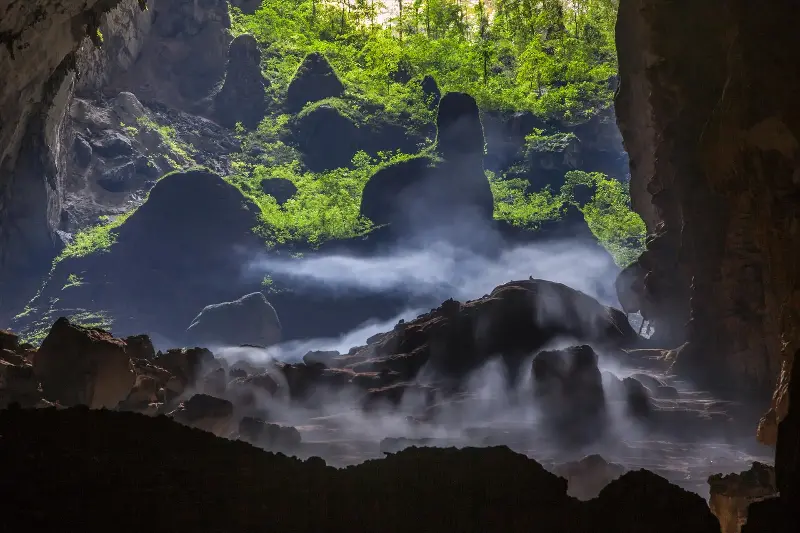
Nestled deep within the Phong Nha-Ke Bang World Heritage Site (Quang Tri province), Son Doong Cave is recognized as the world's largest cave, a natural wonder that amazes both scientists and international tourists. Described by Travel + Leisure magazine as an "unimaginable natural wonder"—an underground world with its own climate, jungle, underground rivers, and even clouds formed from within the cave.
An unbelievable natural wonder
According to National Geographic, Son Doong Cave was first discovered in 1991 when Mr. Ho Khanh, a local resident, accidentally found the cave entrance while searching for agarwood near the Vietnam-Laos border. Although he didn't have time to explore deep inside, the biting cold and thick fog emanating from the cave left an unforgettable impression on him.
In 2000, cave explorers from the Royal British Cave Association asked him to guide them back to its location, but it took him another eight years to find the lost cave entrance in the forest. Therefore, Son Doong was only surveyed in 2009. Upon its discovery , the expedition team, along with National Geographic magazine , announced it as the world's largest natural limestone cave.
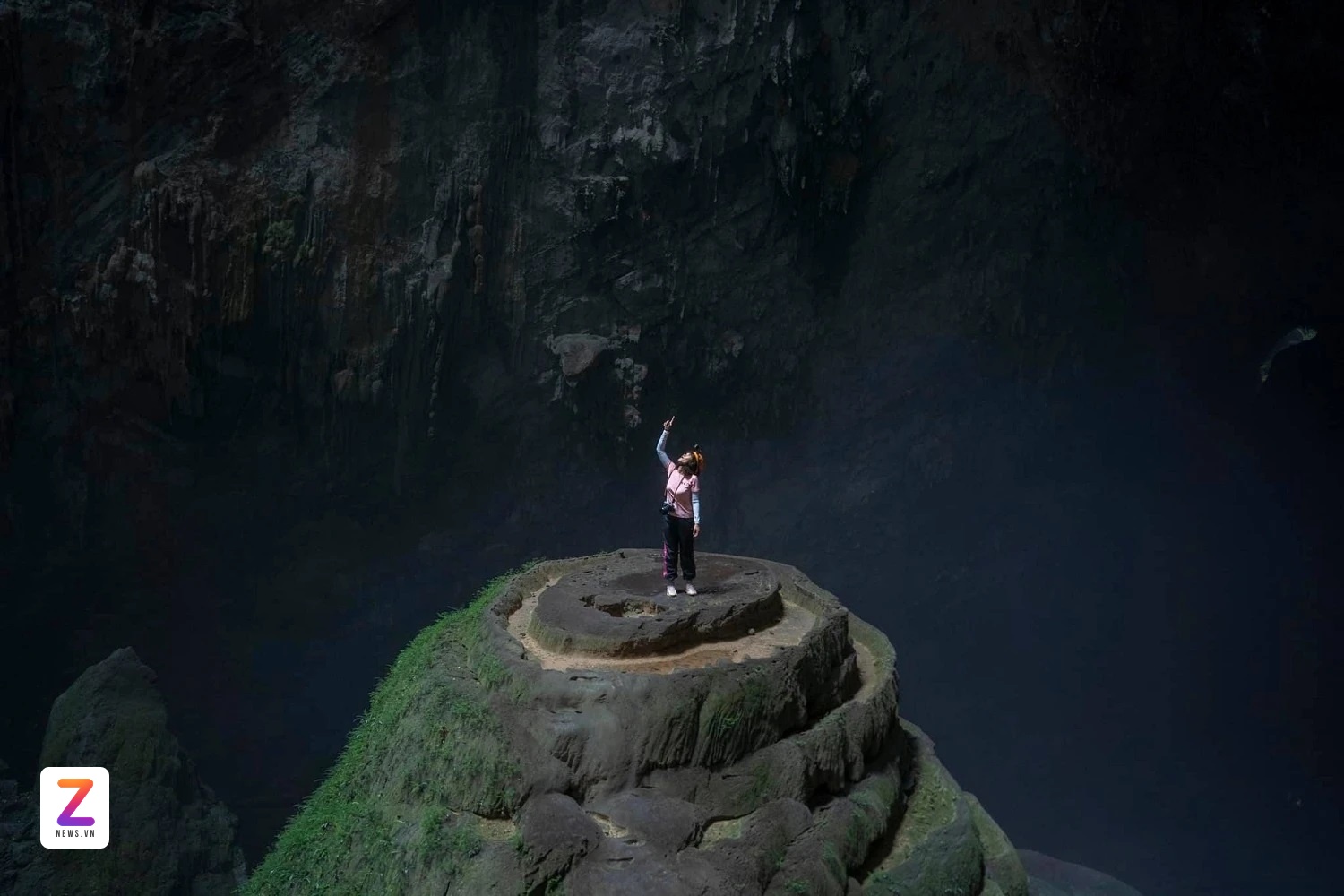
Son Doong Cave has a total length of over 9 km, with enormous chambers reaching heights of up to 200 m and the widest points up to 150-160 m, with a volume of 38.5 million m3. Live Science once described Vietnam's Son Doong Cave as "so large that you could fit 15 Great Pyramids of Giza inside and fly a Boeing 747 through some of the cave's entrances."
The name Son Doong, meaning "mountain river cave," was given to this colossal cave. It was recognized as the world's largest natural cave in 2013 and again as the world's largest by volume in 2015. CBS News called it a "wonder of the 21st century."
After its discovery, Son Doong Cave was quickly recognized by the scientific community as one of the most important natural discoveries of modern times, and simultaneously became a global symbol of the pristine and mysterious beauty of nature.
The Phong Nha-Ke Bang area, home to Son Doong Cave, has been recognized by UNESCO as a World Natural Heritage Site due to its outstanding geological value and biodiversity. Son Doong Cave is also considered one of the most important geological discoveries of the 21st century.
Interesting facts about Son Doong Cave
Son Doong Cave is not simply the world's largest cave, but also a living testament to the wonder and boundless creativity of nature.
There are even "ecological forests" inside the ground.
According to Travel & Leisure, one of the most unusual things about Son Doong Cave is the existence of primeval forests deep inside the cave. Thanks to giant sinkholes in the cave ceiling, also known as natural "skylights," sunlight can penetrate, creating conditions for trees to grow. This forest is often called the "Garden of Eden."
Scientists also discovered many species of organisms living in the cave that are adapted to the completely dark environment, including insects and microorganisms that had never been recorded before.
It has its own distinct climate system.
Son Doong Cave is not just an ordinary cave, but almost a complete climate and weather system. The temperature, humidity, and airflow inside the cave can create clouds and fog. Many people who set foot inside feel as if they are stepping into another world – where nature operates according to its own rules.
The giant underground river
Inside the cave is a system of underground rivers flowing throughout. This underground water system originates from the Rao Thuong and Khe Ry rivers on the Laotian border. The water flows through cracks in the limestone, eroding the rock and creating a giant tunnel within the mountain mass. This is the factor that contributed to the formation and expansion of the cave over millions of years through the process of limestone erosion.
The stone pillars, the majestic walls
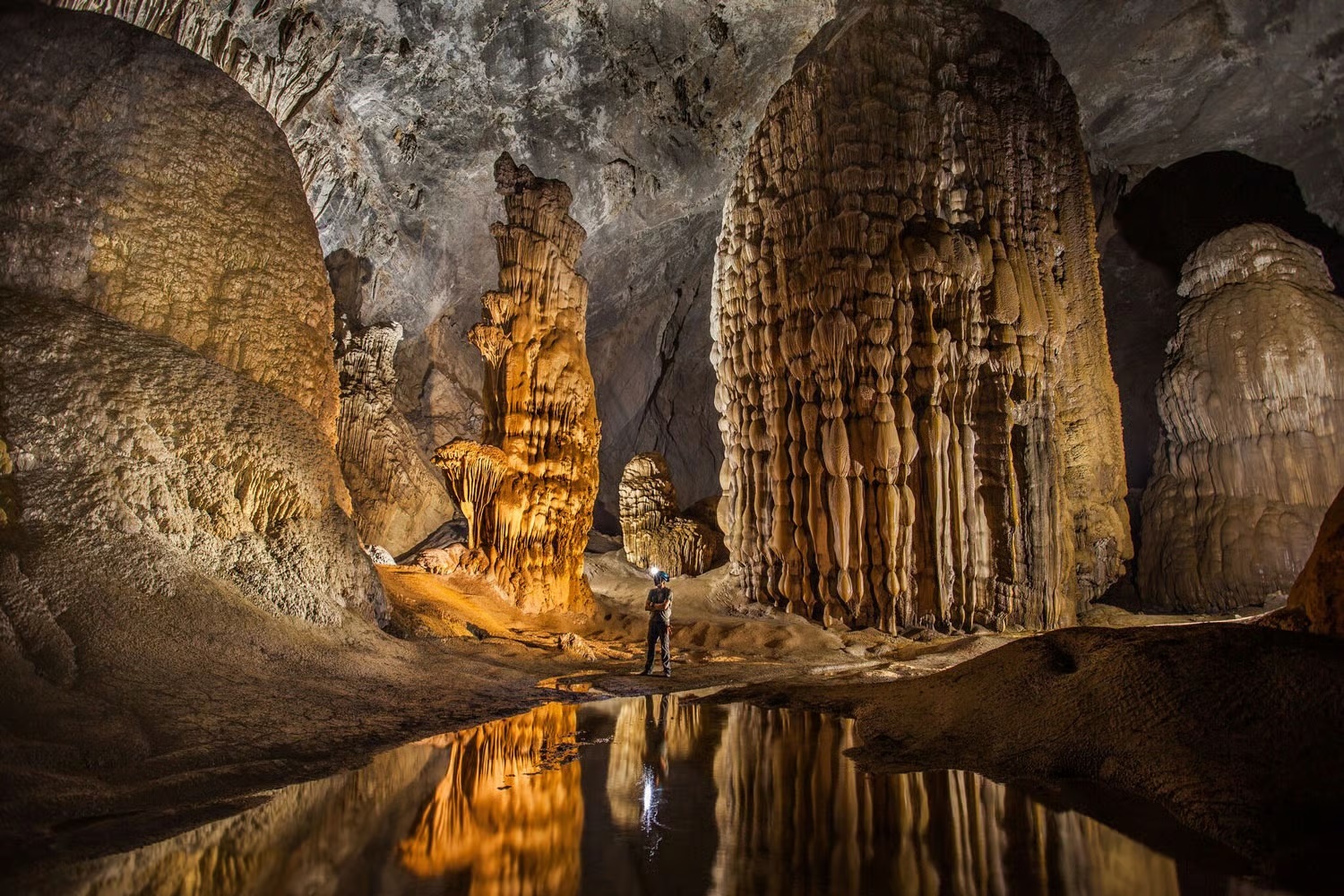
Son Doong boasts stalactite columns reaching heights of over 70 meters – among the largest in the world. Some formations are so enormous that they resemble natural stone buildings.
A unique feature of the cave is a sheer cliff, approximately 80-90 meters high, almost vertical, located at the end of the Son Doong cave exploration route. It was named the "Great Wall of Vietnam" by the British Royal Cave Association expedition during their 2009 survey of the cave. Due to its great height and slippery surface, overcoming this wall is impossible by conventional climbing methods and requires the use of ropes and specialized equipment.
Almost completely isolated from the outside world.
Due to its rugged terrain and relatively recent discovery, Son Doong Cave has remained virtually untouched by human activity for millions of years. This has helped preserve its internal ecosystem in pristine condition.
Because of its mysterious nature, this place is not only a natural wonder but also a significant challenge and danger for anyone who wants to explore it. Today, although it has become a dream destination for many, Son Doong Cave is still strictly protected. Tours are limited in number (approximately 1,000 visitors per year) to ensure that the fragile ecosystem inside the cave is not affected.
The job market is changing rapidly, and to survive, people need lifelong learning. In this context, Tri Thức - Znews magazine introduces to readers the book " Lifelong Learning" by author Michelle R. Weise.