



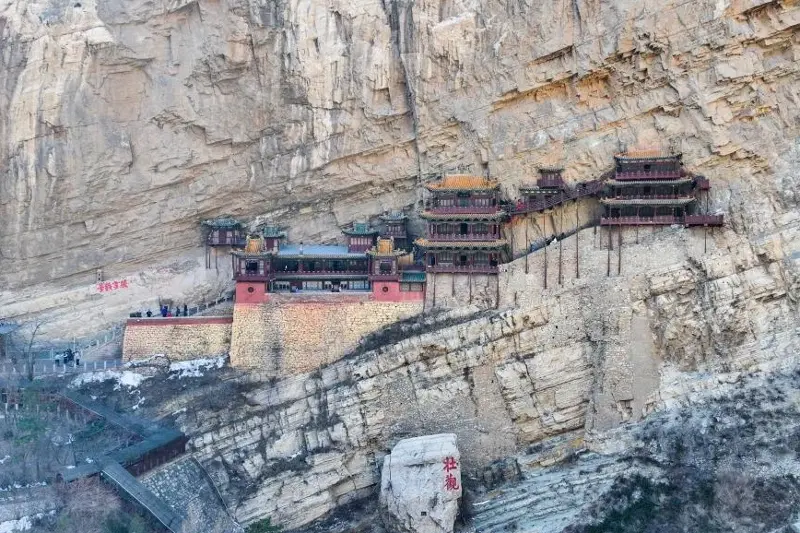
A drone photograph taken on February 28, 2025, captures a panoramic view of the Hanging Monastery. Photo: Xinhua .
In Hunyuan County, Datong City, Shanxi Province, the majestic Hengshan mountain range seems to embrace the Hanging Monastery. According to China Culture , it is one of the "Five Sacred Mountains" (five sacred mountains representing the five directions: East, West, South, North, and Center) of China.
Perched precariously on a cliff, Huyen Khong Pagoda is also known as the Hanging Pagoda because it appears to be suspended about 60 meters above the ground. From a distance, more than 40 halls and wooden corridors cling vertically to the cliff face, supported by only about 30 wooden pillars.
The Hanging Monastery was built in 491 during the Northern Wei Dynasty, when the capital was located in Pingcheng, now Datong City. Within an area of only about 300 square meters, this more than 1,500-year-old complex combines the worship spaces of Buddhism, Taoism, and Confucianism, and is considered the only surviving temple in China that harmonizes all three ideologies.
In recent years, Xuankong has become a popular tourist destination in Shanxi province, especially after appearing in the game Black Myth: Wukong . Many tourists are willing to queue for hours to walk up the narrow wooden walkways halfway up the mountain, where just looking down is enough to make many people's legs tremble.
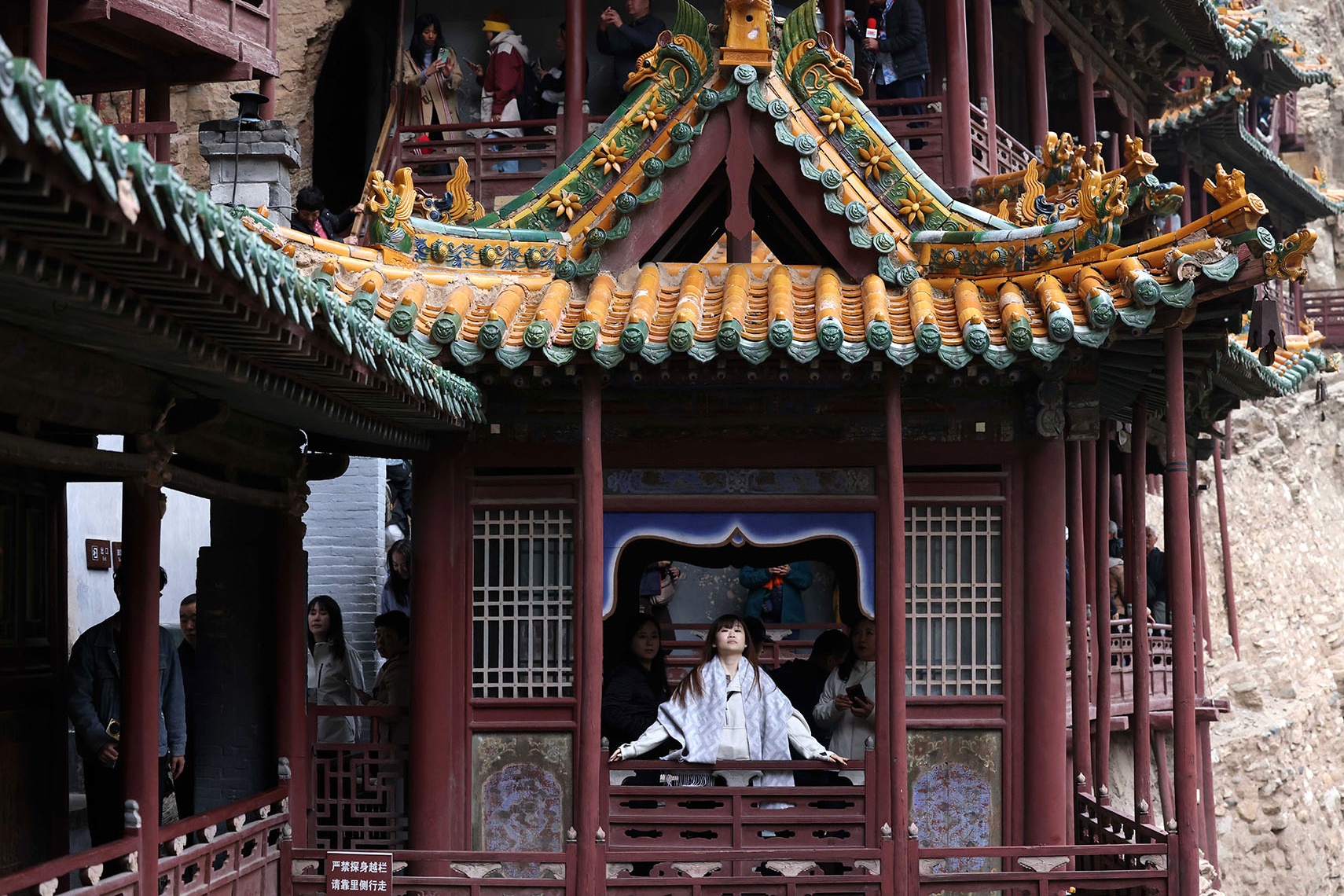
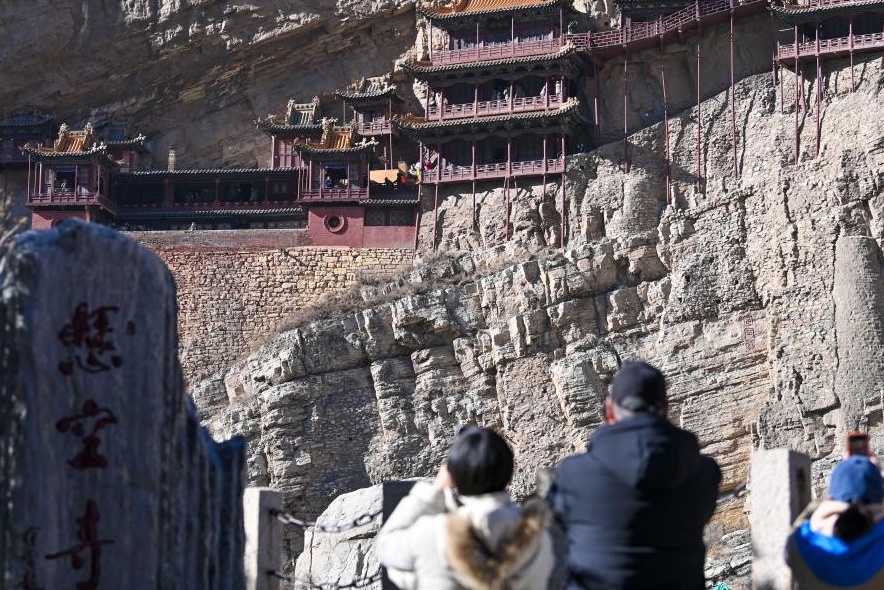
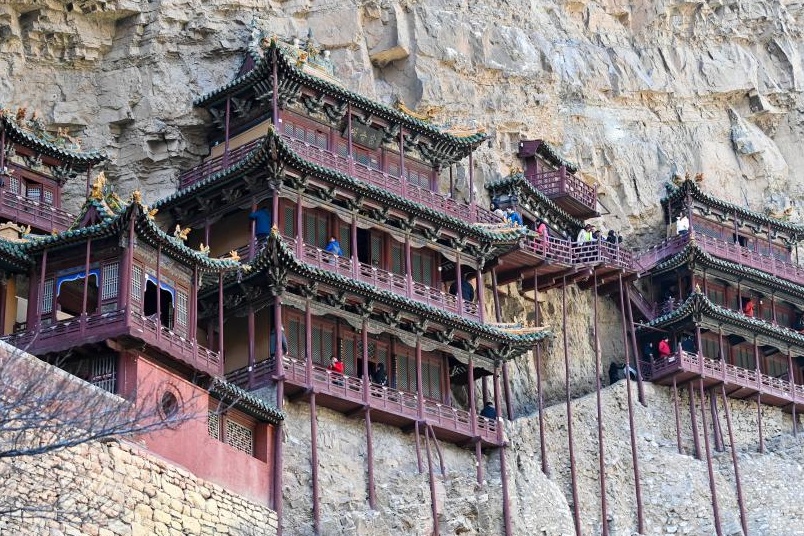
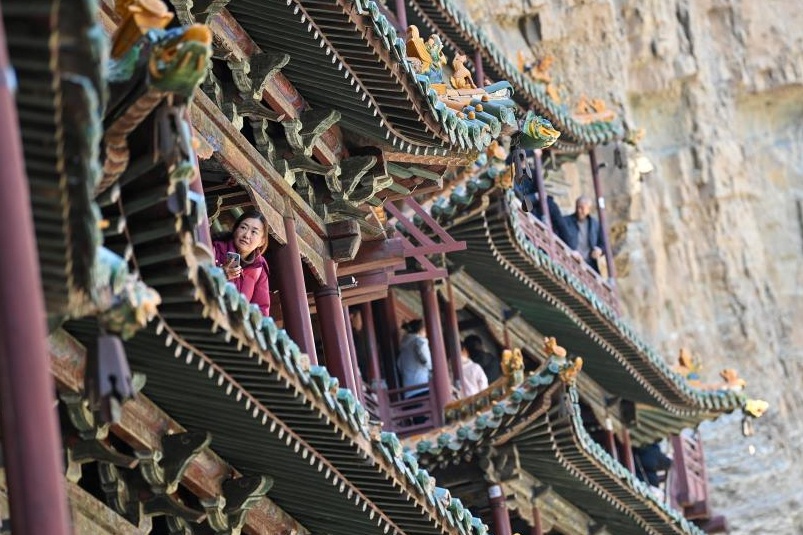
The type of wood used in the Hanging Pagoda is also quite special; it's spruce, an extremely hard, dense, and waterproof material. Photo: Xinhua News Agency.
According to local reports, the rapid increase in visitors put significant pressure on the ancient structure. Authorities subsequently reduced the maximum daily visitor limit from 3,275 to 2,475 to minimize the impact on the wooden structure, which has stood for over 15 centuries.
What makes Hanging Monastery famous is not only its precarious location, but also its construction techniques, which still amaze many experts today. Looking up from below, many people think the entire temple is supported by red wooden pillars underneath. However, according to archaeological research and experts in ancient Chinese architecture, the real "secret" lies deep within the cliff face.
Experts discovered a system of large wooden beams embedded deep in the rock, acting as giant levers. Part of the beams protruded to support the corridors and shrines, while the rest were buried deep in the mountain to provide balance.
According to Luo Zhewen, an expert in ancient architecture from the State Administration of Cultural Heritage of China, if the beams were as short as many people think, the entire structure "would have collapsed into the ravine long ago."
According to him, the ancients carved deep holes into the rock face, then inserted wooden beams and secured them with wedges. This mechanism is similar to modern expansion bolts: the deeper the wedge is driven, the more the wooden end expands and grips the rock.
"It's like a lever. The long tail is embedded deep into the cliff face to secure the part of the structure that protrudes outwards," he explained.
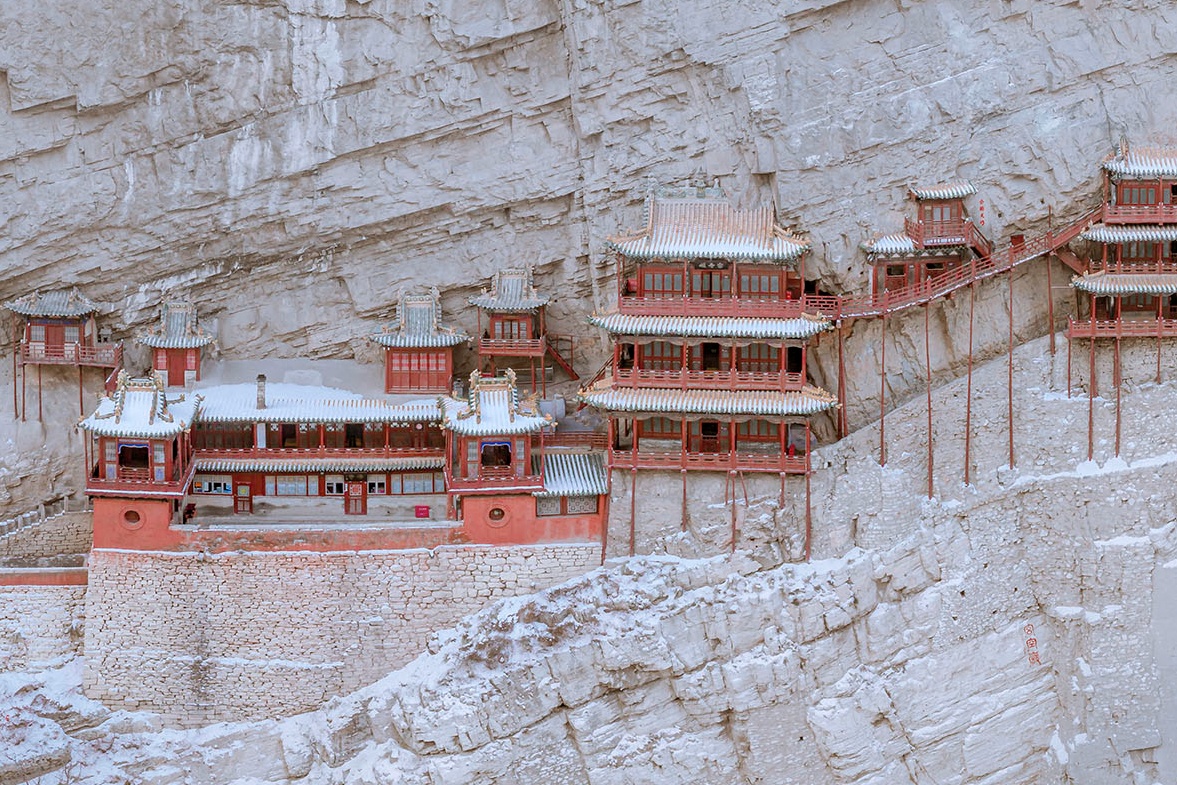
The Hanging Monastery is perched precariously on a nearly vertical cliff in Huyuan County, Datong City, Shanxi Province. Photo: China Daily.
Besides the beam construction technique, the entire structure also uses traditional mortise and tenon joints instead of metal nails. This is considered one of the reasons why the Hanging Pagoda has survived numerous major earthquakes in the Hunyuan area for hundreds of years. Mr. Luo Zhewen assessed that this type of structure has excellent vibration absorption capabilities, similar to an "elastic structure" in ancient architecture.
Not only people, but the natural terrain also contributes to protecting the temple. Huyen Khong is situated in a recess of Thuy Binh cliff, helping to avoid direct rockfalls and limit rain damage. The mountains on either side form a natural "shield," reducing strong winds and prolonged sunlight – factors that easily cause the wood to deteriorate.
Zhao Sijing, a member of the Beijing Folk Artists Association, believes that the unique environment is one of the key reasons the temple has survived for over 1,400 years. "The mountain is like the bottom of an inverted pot, which can block the rain and protect the structure," he said.
Today, amidst the booming tourism in Shanxi, Hanging Monastery is not only a popular check-in spot but also a symbol of the architectural ingenuity of ancient Chinese people.
Standing on the narrow wooden walkways halfway up the cliff, many visitors still find it hard to believe that this structure was built using only wood, rope, and handcrafted tools more than 1,500 years ago.